
ascariasis
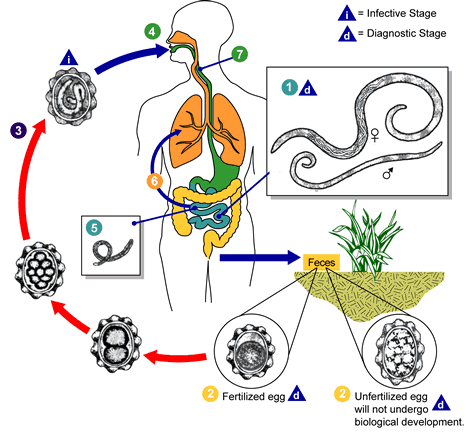
Ascariasis life cycle. Image source: CDC.
Ascariasis, or roundworm (nematode) infection of the intestines, is common throughout the world in both temperate and tropical areas where sanitation and hygiene are poor. In those areas, everyone may be harboring the parasite.
Ascariasis is one of the most common human parasitic infections. An estimated 1.4 billion people worldwide have ascariasis, and the disease is most common in children between the ages of 3 and 8. According to the World Health Organization, ascariasis causes approximately 60,000 deaths annually worldwide.
Cause of ascariasis
Ascaris infection is caused by a parasitic roundworm called Ascaris lumbricoides. This worm resembles the common earthworm in appearance but is unsegmented. Ranging in length from 6 to 13 inches, the female worm may grow to be as thick as a pencil. Up to one hundred worms could potentially infect the human body.
Transmission
Almost more than any other parasitic disease, inadequate personal hygiene leads to Ascaris infection. Human feces found in fields, streets, and back yards are a major source of infective eggs in heavily populated areas.
The eggs do not infect humans when first excreted by the roundworm. They usually are transmitted by hand to mouth. The use of human feces as fertilizer may also permit transmission of infective eggs through food that is grown in the soil and eaten without being thoroughly washed. The eggs are resistant to extremes of temperature and humidity.
The eggs require several weeks to develop and become infective. If you swallow infective eggs, they pass into your intestines where they hatch into larvae and then begin their journey through your body. Once through your intestinal wall, the eggs reach your lungs by means of the bloodstream or lymphatic system.
In your lungs, they pass through the air sacs, are carried up the bronchial tree with respiratory secretions and into your throat. When in your throat, you re-swallow them, and they return to the small intestine where they grow, mature, and mate. The worms become mature in about two months. Adult worms in the lumen of the small intestine produce 200,000 eggs a day. These eggs are then passed through the intestines and excreted in feces, which remain in the soil. These eggs are left to be ingested for several weeks, when they become infective, and can be swallowed when in the food and water supply.
Symptoms
If you have only a few roundworms in your intestines, you might not have symptoms. If you do have symptoms, you may have vague or sporadic feelings of abdominal pain.
The first sign of infection may be the presence of a live worm in your vomit or stool. If the larvae have migrated to your lungs, you may have an illness resembling pneumonia with wheezing, cough, and fever. This stage of the disease precedes the intestinal phase by weeks, and the symptoms are difficult for a healthcare provider to diagnose.
If you have a heavy infection of the worms, you may have a partial or complete blockage of the small intestine and experience the following symptoms:
The heavier or greater the worm infection, the more severe your symptoms are likely to be. Your pancreas might become inflamed. Serious infections, especially those causing blockages, can be fatal.
Diagnosis
Once mature female roundworms are in your intestines, a healthcare provider can diagnose the infection by finding the eggs (or live worms) in your stool.
Lung infection is more difficult to diagnose, but can be confirmed by finding evidence of the larvae in lung or stomach fluids.
Treatment
Ascaris infection can be treated successfully with mebendazole, albendazole, or pyrantel pamoate.

