
types of insulation
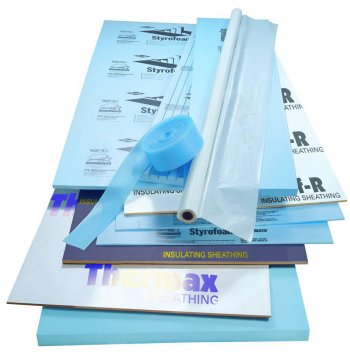
When insulating your home, you can choose from many types of insulation. To choose the best type of insulation, you should first determine the following:
The table below provides an overview of most of the available insulation forms, insulation materials, their installation methods, where they're applicable to install in a home, and their advantages.
| Types of Insulation | ||||
|---|---|---|---|---|
| Form | Insulation materials | Where applicable | Installation method(s) | Advantages |
| Blanket: batts and rolls | Fiberglass Mineral (rock or slag) wool Plastic fibers Natural fibers |
Unfinished walls, including foundation walls, and floors and ceilings. | Fitted between studs, joists, and beams. | Do-it-yourself. Suited for standard stud and joist spacing, which is relatively free from obstructions. |
| Concrete block insulation | Foam beads or liquid foam:
Vermiculite or perlite pellets |
Unfinished walls, including foundation walls, for new construction or major renovations. | Involves masonry skills. | Autoclaved aerated concrete and autoclaved cellular concrete masonry units have 10 times the insulating value of conventional concrete. |
| Foam board or rigid foam | Polystyrene Polyisocyanurate or polyiso Polyurethane |
Unfinished walls,
including foundation
walls; floors and ceilings; unvented low-slope roofs. |
Interior applications: must be covered
with 1/2-inch gypsum board or other building-code approved material
for fire safety.
Exterior applications: must be covered with weatherproof facing. |
High insulating value for relatively
little thickness. Can block thermal short circuits when installed continuously over frames or joists. |
| Insulating concrete forms (ICFs) | Foam boards or foam blocks | Unfinished walls, including foundation walls, for new construction. | Installed as part of the building structure. | Insulation is literally built into the home's walls, creating high thermal resistance. |
| Loose-fill | Cellulose Fiberglass Mineral (rock or slag) wool |
Enclosed existing wall or open new wall
cavities; unfinished attic floors; hard-to-reach places. |
Blown into place using special equipment; sometimes poured in. | Good for adding insulation to existing finished areas, irregularly shaped areas, and around obstructions. |
| Reflective system | Foil-faced kraft paper, plastic film, polyethylene bubbles, or cardboard | Unfinished walls, ceilings, and floors. | Foils, films, or papers: fitted between wood-frame studs, joists, and beams | Do-it-yourself.
All suitable for framing at standard spacing. Bubble-form suitable if framing is irregular or if obstructions are present.
Most effective at preventing downward heat flow; however, effectiveness depends on spacing. |
| Rigid fibrous or fiber insulation | Fiberglass Mineral (rock or slag) wool |
Ducts in unconditioned spaces and other places requiring insulation that it can withstand high temperatures. | HVAC contractors fabricate the insulation into ducts either at their shops or at the job sites. | Can withstand high temperatures. |
| Sprayed foam and foamed-in-place | Cementitious Phenolic Polyisocyanurate Polyurethane |
Enclosed existing wall or open new wall
cavities; unfinished attic floors. |
Applied using small spray containers or in larger quantities as a pressure sprayed (foamed-in-place) product. | Good for adding insulation to existing finished areas, irregularly shaped areas, and around obstructions. |
| Structural insulated panels (SIPs) | Foam
board or liquid foam insulation core Straw core insulation |
Unfinished walls, ceilings, floors, and roofs for new construction. | Builders connect them together to construct a house. | SIP-built houses provide superior and uniform insulation compared to more traditional construction methods; they also take less time to build. |