ice worm
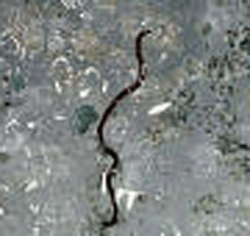
Ice worm in Alaska. Photo: Tom Bean/CORBIS.
An ice worm is an oligochaete ("few-bristled") worm that lives on temperate glaciers or perennial snow. There are several species of ice worm, ranging in color from yellowish brown to reddish brown or black. They are usually less than 1 millimeters (0.04 inch) in diameter and average about 3 millimeters (0.1 inch) long. Some feed off red algae.
Ice worms are able to boost their cells' energy production when the temperature drops. They also have cell membranes and enzymes that function and stay flexible in temperatures where most animals' cellular processes come to a halt. The downside is extreme sensitivity to heat. At about 40°F, the worms' membranes melt and their enzymes cease to function.
In 2005, NASA provided $200,000 to fund research to explore the worms' cold tolerance and what it might say about the possibility of life on Jupiter's icy moons and other planets. The results of such work might also help improve cold storage of organs and tissues for transplantation.