
lake
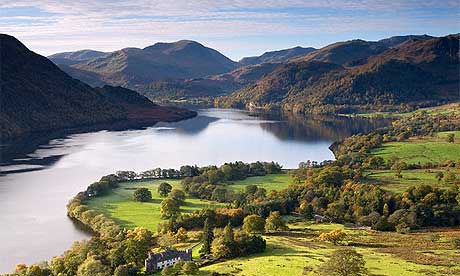
Ullswater lake, Cumbria, England.
A lake is a land-locked stretch of water usually fed by a river, though the term may be applied to temporary widenings of a river's course or to almost enclosed bays and lagoons. In some parts of the world lakes may exist only during certain seasons, drying up partially or entirely during drought.
Most lakes are the result of glacial erosion during ice ages. Glaciers hollowed out deep basins, often depositing moraine to form natural dams. Most lakes have an outflowing stream: where there is great water loss through evaporation there is no such stream and the lake water is extremely saline (see also evaporites), as in the Dead Sea. Lakes are comparatively temporary features of the landscape as they are constantly being infilled by silt.

