
Magdeburg Project
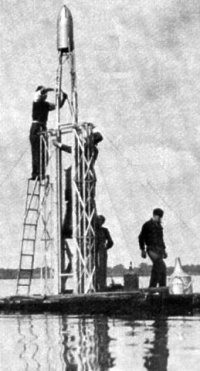
Magdeburg Project was a project, headed by German scientists Rudolf Nebel and Herbert Schaefer, as part of which emerged, in 1933, the first definite plan to build a manned rocket. A test rocket was launched on 9 June 1933 at Wolmirstedt near Magdeburg, but the rocket never cleared its 10-meter launch tower. Several more tests followed with mixed results. On 29 June, 1933, a rocket left the launch tower, but flew horizontally at low altitude for a distance of about 300 meters. This rocket was recovered undamaged, refashioned into a design more closely resembling the VfR Repulsors, and eventually launched from Lindwerder Island in Tegeler Lake near Berlin. It climbed to an altitude of about 300 meters before crashing 100 meters from the launch tower. Additional test launches were conducted from a boat on Schwielow Lake through August 1933 at which time the Magdeburg Project was abandoned.

