
creosote condensation in chimneys
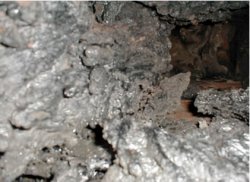
A chimney choked with creosote.
Creosote is a liquid by-product of wood combustion (or distillation) that condenses on the internal surfaces of vents and chimneys. If not removed regularly, it can corrode the surfaces and fuel a chimney fire. Creosote condenses when stack temperatures drop below 250°F, so the type of chimney is very important. An insulated one is desirable. A large, airtight heater in a small home in a choked position will produce creosote regardless of the type of wood burned or its moisture content. Minimize creosote formation by:
Using UL-listed wood-burning equipment and chimney materials and installing the unit according to manufacturer's instructions. Proper sizing of chimney and components.
Building a small hot fire for a short period rather than an "idle" fire over a long period, when temperatures are moderate.
Keeping a hot fire; many manufacturers recommend opening the damper and allowing the stove to burn hot for at least 15 minutes to burn away small amounts of creosote.
Using only well-seasoned hardwoods.
Inspecting your system frequently and learning to operate it most efficiently. Clean your chimney accordingly.