A
· B · C
· D · E
· F · G
· H · I
· J · K
· L · M
· N · O
· P · Q
· R · S
· T · U
· V · W
· X · Y
· Z
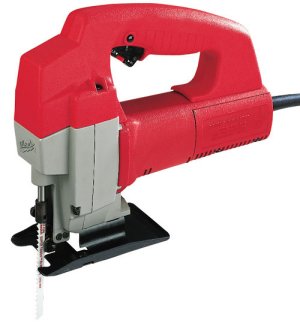
jig saw
A hand-held power saw used for cutting curves, such as stenciled designs
or other custom shapes, into a piece of wood or other material. A jig saw
combines into a convenient package many of the functions of a band saw and
a scroll saw. Jig saws are also called
saber saws.
The essential parts of a jig saw are a reciprocating saw blade connected
to an electric motor. Traditional jigsaws are hand saws, consisting of a
handle attached to a small, thin blade.
Jigsaws come in 2 basic styles: D handled and barrel grip. They may also
be corded or cordless. The cordless variety are handy in areas where extension
cords are difficult to use. They're best suited to cutting wood and wood
products. Although they can cut tougher materials, the extra power needed
for these applications quickly drains batteries. Cordless jig saws are available
from 12 to 18 volts – the higher the voltage, the longer the battery
life. Corded jig saws are better able to handle tough cutting jobs or continuous
use. They operate at from 3.5 to 6 amps. Higher amp motors give more power
and enable the saw to cut thick boards, light metals, and other tough materials.
Before purchasing a jig saw, look to see if the mechanism for adjusting
the base plate is sturdy. On less expensive models these are weak and will
eventually wobble, making it difficult to cut accurately.
Features
- Variable speed saws enable the speed of the blade
to be adjusted according to the material being cut. When used in conjunction
with properly matched blades, this feature provides cleaner, faster
cuts in different materials. Variable speed saws typically have a range
of 500 to 3,100 strokes per minute.
- Orbital action moves the blade from side to side
as well as up and down. This additional action enables the saw to cut
through stock faster. Most orbital action saws have settings to change
the amount of side-to-side motion based on the material being cut.
- An adjustable foot or sole lets the operator make
cuts at an angle to the face of the material. Most saws with this feature
have a range of 0° to 45°.
- Vacuum or blower features keep the cut line clear
of sawdust and other debris during operation.
- Tool-free blade changing lets the user change blades
quickly and saves time when cutting multiple types of material.
- Blade supports greatly reduce blade flexing during
use. The reduced flexing leads to straighter cuts and extends blade
life.
Jig saw blades
Jig saw blades are classified by width, number of teeth per inch (tpi),
and material composition. The higher the tpi the smoother the cut; the lower
the tpi the quicker the cut. Common types of blade include:
- High speed steel (HSS). Usually used for wood and
light metal cutting.
- Bi-metal. Used for wood and light metal cutting.
- Cobalt steel. Harder and longer-lasting than HSS
or bi-metal blades. Commonly used for wood and metal cutting.
- Carbide grit. Used to cut masonry board.
- Scrolling. Narrower than typical jig saw blades and
used to make tighter turning cuts.
Related category
• TOOLS
Also on this site: Encyclopedia
of Science
Encyclopedia
of History
BACK TO TOP
|