
power conditioning equipment
Power conditioning equipment is electrical equipment, or power electronics, used to convert power from a solar array, or other renewable energy system, into a form suitable for subsequent use. Power conditioners process the electricity produced by a photovoltaic system so it will meet the specific demands of the load. Although most equipment is standard, it is very important to select equipment that matches the characteristics of the load. Power conditioners may have these functions:
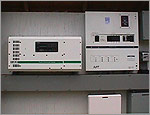 |
| An inverter (left) and charge controller (right)
|
Specific requirements of power conditioners depend on the type of PV system they are used with and the applications of that system. For DC applications, power conditioning is often done with regulators, which control output at some constant level of voltage and current to maximize output. For AC loads, power conditioning must include an inverter that converts the direct current generated by the PV array into alternating current. Many simple devices – for example, ones that run on batteries – use DC electricity. However, AC electricity, which is what is generated by utilities, is needed to run most modern appliances and electronic devices.
Power conditioning equipment is an important component of the balance-of-system.