
small solar electric arrays
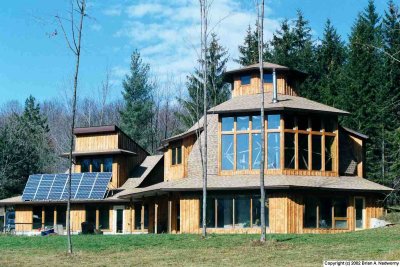
For small solar electric systems, the most common array design uses flat-plate photovoltaic (PV) modules or panels. These panels can either be fixed in place or allowed to track the movement of the sun.
The simplest PV array consists of flat-plate PV modules in a fixed position. These are some advantages of fixed arrays:
These features make them suitable for many locations, including most residential roofs. Because the panels are fixed in place, their orientation to the sun is usually at an angle that is less than optimal. Therefore, less energy per unit area of array is collected compared with that from a tracking array. This drawback, however, must be balanced against the higher cost of the tracking system.
Energy performance
Solar arrays are designed to provide specified amounts of electricity under certain conditions. The following factors are usually considered when determining array energy performance:
The amount of electricity required may be defined by any one or a combination of the following performance criteria:
This last parameter is often given as a power efficiency, equal to ("power output from array" / "power input from sun") × 100%. Power is typically given in units of watts (W), and energy is typically in units of watt-hours (Wh), or the power in watts supplied during an hour.
To ensure the consistency and quality of photovoltaic systems and increase consumer confidence in system performance, various groups – such as the Institute of Electrical and Electronics Engineers (IEEE), the International Electrotechnical Commission (IEC), and the American Society for Testing and Materials (ASTM) – are working on standards and performance criteria for PV systems.