
wind turbine swept area
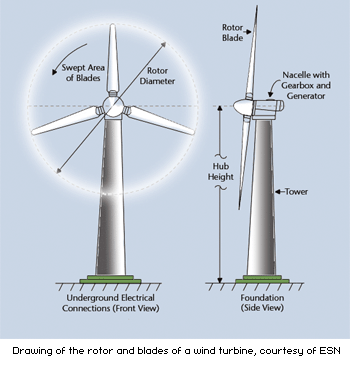
The swept area is the area through which the rotor blades of a wind turbine spin, as seen when directly facing the center of the rotor blades. The power output of a wind turbine is directly related to the swept area of its blades. The larger the diameter of its blades, the more power it is capable of extracting from the wind. The larger the blades, the stronger they need to be to withstand the higher levels of centrifugal and cyclic varying gravitational loads. With a 31-meter (100-foot) blade weighing around 4.5 tonnes and a 54-meter (177-foot) blade weighing around 13 tonnes the weight of the blade is not proportional to the size and power rating of the machine. Each extra meter of length requires extra strength and adds further to the structures weight and so compounds the problem. Furthermore, the bending moments across the swept area of the blade can vary considerably with a possible difference of several meters a second in wind speeds between the top and the bottom of the blades rotation. This all adds up to a substantial increase in fatigue, not only in the blade structure but the machines hub, bearing, drive shaft and support tower.