
generator
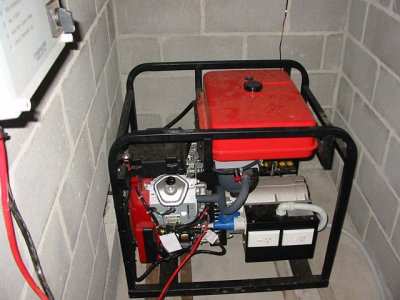
Backup generator. Credit: Australia-Wide Solar.
A generator is a device for converting chemical, mechanical, or some other type of energy, into electrical power. Electromagnetic generators are the main source of electricity in the world today. They may be driven by steam turbines, water turbines, wind turbines, internal combustion engines, or a moving part of some other type of machine. A generator is the reverse of an electric motor, which uses electricity to produce another form of energy. In the case of solar technology, a solar module, or a system of solar modules, is considered to be a generator.
Generators are rated by watts (W). To determine which size generator is right for your needs following these steps:
| Sample tool and wattage guide | |
|---|---|
| Light bulb | 100W |
| Fan | 200W |
| Color TV 20" | 400W |
| Deep freezer | 500W |
| Computer 15" monitor | 800W |
| Refrigerator/freezer 18 cu.ft. | 800W |
| Sump pump | 1000W |
| Water well pump 1/2 HP | 1400W |
| Space heater | 1800W |
| Electric water heater | 4000W |