
Cambrian period
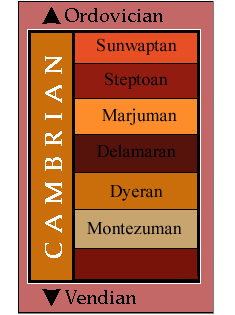
The Cambrian period is the earliest period of the Paleozoic era. The Cambrian ran from 543 to 490 million years ago. During it, the fossil-producing species of plants and animals first proliferated – a dramatic diversification that has been called the Cambrian explosion. When the fossil record is looked at closely, it turns out that the fastest growth in the number of major new animal groups took place during the Tommotian and Atdabanian stages of the Early Cambrian, a period of time which may have been as short as five million years. In that time, the first undoubted fossil annelids, arthropods, brachiopods, echinoderms, molluscs, onychophorans, poriferans, and priapulids show up in rocks all over the world.
The Cambrian, which was named by Adam Sedgewick after Cambria, the Roman name for Wales, where rocks of this age were first studied, was preceded by the Ediacaran period and followed by the Ordovician period.

