
Carboniferous period
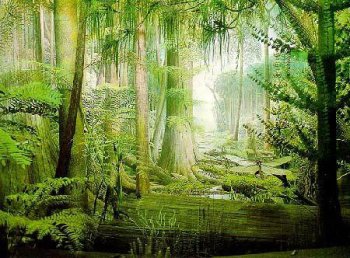
Carboniferous forest. © The Field Museum.
The Carboniferous period is the fifth of the six periods of the Paleozoic era. The Carboniferous period spans the time between the Devonian and the Permian, about 359 to 290 million years ago. It is divided into two series: the Lower Carboniferous is characterized by marine limestones with a coral-rich fauna; the Upper Carboniferous is dominated by river and deltaic sediments containing coal seams formed from extensive swampy forests of conifers and tree ferns. In North America, the Lower Carboniferous is known as the Mississippian period and the Upper Carboniferous as the Pennsylvanian period.
The term "Carboniferous" comes from England, in reference to the rich deposits of coal that occur there. These deposits of coal occur throughout northern Europe, Asia, and midwestern and eastern North America. The Carboniferous period is also notable for the first appearance of the amniote egg, which allowed for the further exploitation of the land by certain tetrapods. The amniote egg allowed the ancestors of birds, mammals, and reptiles to reproduce on land by preventing the desiccation of the embryo inside. There was also a trend towards mild temperatures during the Carboniferous, as evidenced by the decrease in lycopods and large insects and an increase in the number of tree ferns.

