
carbon nanotube
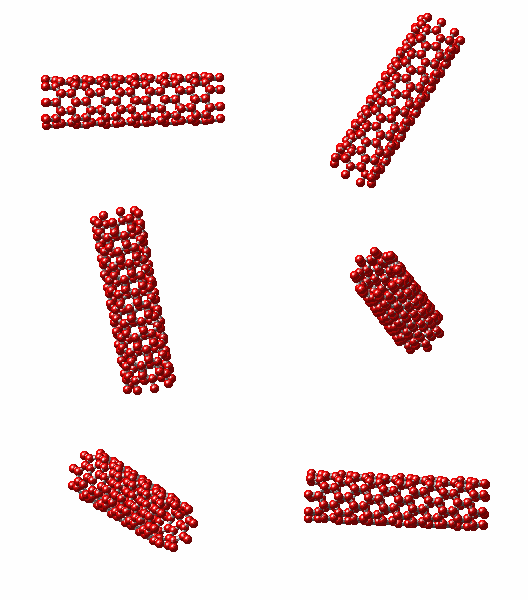
A carbon nanotube, also known as a buckytube, is a cylindrical carbon molecule that belongs to the fullerene structural family, which also includes buckyballs. Carbon nanotubes are essentially rolled-up sheets of graphite, a few nanometers (roughly 50,000 times smaller than the width of a human hair) in diameter and 1–100 microns in length. A nanotube cylinder typically has at least one end capped with a hemisphere of the buckyball structure.
There are many different ways to cut up a piece of graphite and roll it up to form a tube. The tubes can have different diameters and different chiralities. The chirality is the twist of the rows of atoms along the length of the tube. Sometimes the atom rows are parallel to the axis of the tube and sometimes the rows form a helix that winds along the tube. When one or more tubes grow inside another carbon nanotube, it is called a multiwalled nanotube. Carbon nanotubes are very strong – 5–100 times as strong as steel for the same weight, and are efficient conductors of heat. The electrical properties of carbon nanotubes depend on their diameter and their chirality. Some tubes are metallic, others are semiconductors. Their properties make them potentially useful in a wide variety of applications, including nano-electronics, optics, and materials applications.

