
demand water heater
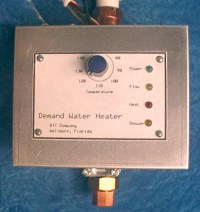
A demand water heater is a type of water heater that has no storage tank thus eliminating storage tank stand-by losses. Cold water travels through a pipe into the unit, and either a gas burner or an electric element heats the water only when needed. Here you'll find basic information about how they work, whether a demand water heater might be right for your home, and what criteria to use when selecting the right model.
How demand water heaters work
Demand water heaters heat water directly without the use of a storage tank. Therefore, they avoid the standby heat losses associated with storage water heaters. When a hot water tap is turned on, cold water travels through a pipe into the unit. Either a gas burner or an electric element heats the water. As a result, demand water heaters deliver a constant supply of hot water. You don't need to wait for a storage tank to fill up with enough hot water. However, a demand water heater's output limits the flow rate.
Typically, demand water heaters provide hot water at a rate of 2–5 gallons (7.6–15.2 liters) per minute. Gas-fired demand water heaters produce higher flow rates than electric ones. Sometimes, however, even the largest, gas-fired model cannot supply enough hot water for simultaneous, multiple uses in large households. For example, taking a shower and running the dishwasher at the same time can stretch a demand water heater to its limit. To overcome this problem, you can install two or more demand water heaters, connected in parallel for simultaneous demands of hot water. You can also install separate demand water heaters for appliances – such as a clothes washer or dishwater – that use a lot of hot water in your home.
Other applications for demand water heaters include the following:
Although gas-fired demand water heaters tend to have higher flow rates than electric ones, they can waste energy if they have a constantly burning pilot light. This can sometimes offset the elimination of standby energy losses when compared to a storage water heater. In a gas-fired storage water heater, the pilot light heats the water in the tank so the energy isn't wasted. The cost of operating a pilot light in a demand water heater varies from model to model. Ask the manufacturer how much gas the pilot light uses for the model you're considering. If you purchase a model that uses a standing pilot light, you can always turn it off when it's not in use to save energy. Also consider models that have an intermittent ignition device (IID) instead of a standing pilot light. This device resembles the spark ignition device on some gas kitchen ranges and ovens.
For homes that use 41 gallons or less of hot water daily, demand water heaters can be 24–34% more energy efficient than conventional storage tank water heaters. They can be 8–14% more energy efficient for homes that use a lot of hot water – around 86 gallons per day. You can achieve even greater energy savings of 27–50% if you install a demand water heater at each hot water outlet.
Selecting a demand water heater
Demand water heaters cost more than conventional storage water heaters. However, you may find that a demand water heater may have lower operating and energy costs, which could offset its higher purchase price.
Before buying a demand water heater, you also need to consider the following:
Installation and maintenance
Proper installation and maintenance of your demand water heater can optimize its energy efficiency.
Proper installation depends on many factors. These factors include fuel type, climate, local building code requirements, and safety issues, especially concerning the combustion of gas-fired water heaters. Therefore, it's best to have a qualified plumbing and heating contractor install your demand water heater. Do the following when selecting a contractor:
If you're determined to install your water heater yourself, first consult the manufacturer. Manufacturers usually have the necessary installation and instruction manuals. Also, contact your city or town for information about obtaining a permit, if necessary, and about local water heater installation codes.
Most tankless water heaters have a life expectancy of more than 20 years. They also have easily replaceable parts that extend their life by many more years. In contrast, storage water heaters last 10–15 years. Periodic water heater maintenance can significantly extend your water heater's life and minimize loss of efficiency. Read your owner's manual for specific maintenance recommendations.
Improving energy efficiency
After your demand water heater is properly installed and maintained, try some additional energy-saving strategies to help lower your water heating bills. Some energy-saving devices and systems are more cost-effective to install with the water heater.
Other water heater options