
water heater fuel types
When selecting a new water heater, it's important to consider what fuel type or energy source you will use, including its availability and cost. The fuel used by a water heating system will not only affect annual operation costs but also the water heater's size and energy efficiency.
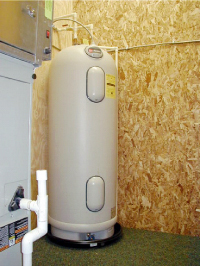 |
Exploring water heater options by fuel type
Fuel type and its availability in your area may narrow your water heater choices. The following is a list of water heater options by fuel or energy source:
Widely available in the United States to fuel conventional storage, demand (tankless or instantaneous), and heat pump water heaters. It also can be used with combination water and space heating systems, which include tankless coil and indirect water heaters.
Available in some areas of the United States to fuel conventional storage water heaters, and indirect combination water and space heating systems.
Available throughout the United States to those who will have or already have a geothermal heat pump system installed in their homes for space heating and cooling. See heat pump water heaters for more information.
Available in many areas of the United States to fuel conventional storage and demand (tankless or instantaneous) water heaters, as well as combination water and space heating systems, which include tankless coil and indirect water heaters.
Available in many areas of the United States to fuel conventional storage and demand (tankless or instantaneous) water heaters, as well as indirect combination water and space heating systems.
Available throughout the United States – most abundantly in the Southwest – for solar water heaters.
Comparing fuel costs and water heater types
If you have more than one fuel type available in your area, it's a good idea to compare fuel costs, especially if you're building a new home. Even if you're replacing a water heater, you may find that you'll save more money in the long run if you use a different fuel or energy source. Contact your utility for current fuel costs or rates.
The type of water heater you choose will also affect your water heating costs. One type of water heater may use a fuel type more efficiently than another type of water heater. For example, an electric heat pump water heater typically is more energy efficient than an electric conventional storage water heater. Also, an electric heat pump water heater might have lower energy costs because of its higher efficiency than a gas-fired conventional storage water heater, even though local natural gas costs might be lower than the electricity rates.