MANNED SPACEFLIGHT
ROCKETS & LAUNCH VEHICLES
A  B  C  D  E  F  G  H  I  J  K  L  M  N  O  P  Q  R  S  T  U  V  W  X  Y  Z

                  
  • HOME
  • ABOUT
  • CATEGORIES
  • SITE MAP
  • COPYRIGHT
  • ADVERTISE
  • CONTACT


  • entire Web this site


    Dream Chaser

    Dream Chaser on the launchpad
    Dream Chaser on launchpad
    Image: SpaceDev
    A spacecraft similar to the Space Shuttle and based on the HL-20, a small plane-like craft developed by NASA in the 1980s as a replacement for the Shuttle. Dream Chaser is being developed by SpaceDev, an aerospace company based in California. SpaceDev claims says it could begin flying four-person suborbital flights in 2008 if it receives about $20 million in funding, and six-person missions to the International Space Station by around 2010 for an additional $100 million.

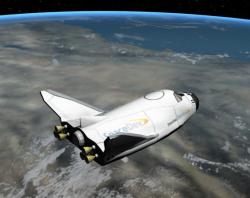
    Dream Chaser in orbit
    Dream Chaser in orbit. Image: SpaceDev
    Like the Shuttle, Dream Chaser will lift off vertically and land horizontally. But it will not carry heavy cargo, and so would be just a fraction of the Shuttle's size. If it follows the dimensions of the HL-20, it would be about four times smaller and eight times lighter than the Shuttle, standing just 9 meters tall and weighing 10 tons.

    Unlike the Shuttle's main engines, Dream Chaser’s launcher will not use cryogenic fuel, which must be insulated with foam.
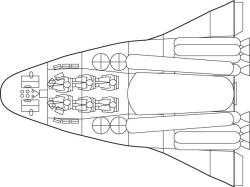
    Dream Chaser plan view
    Dream Chaser plan view. Image: SpaceDev
    This will avoid the problem of falling foam on take-off that ultimately destroyed the Shuttle Columbia in 2003. Instead of cryogenic liquid hydrogen or oxygen fuel, the spacecraft will use hybrid rockets that burn liquid nitrous oxide and solid rubber. Dream Chaser will be strapped to one of three large rocket boosters on the launch pad. The two outer boosters will burn and fall away first, then the spacecraft will separate from the third. It will finally reach orbit by successively firing two smaller rockets that SpaceDev is now developing under contract with the US Air Force. The large rocket boosters will each produce 450,000 kg (1 million lb)of thrust – though it is still on the drawing board. But the company already has experience with hybrid rockets, helping to build the hybrid motor that powered SpaceShipOne with 7,000 kg (15,000 lbf) of thrust.


    Related category

       • MANNED SPACEFLIGHT
       • ROCKETS, MISSILES, AND LAUNCH VEHICLES


    Also on this site:

    Encyclopedia of Alternative Energy & Sustainable Living
    Encyclopedia of History
    Transport Concepts & Designs (partner site)


    BACK TO TOP