
Ikeya-Seki, Comet
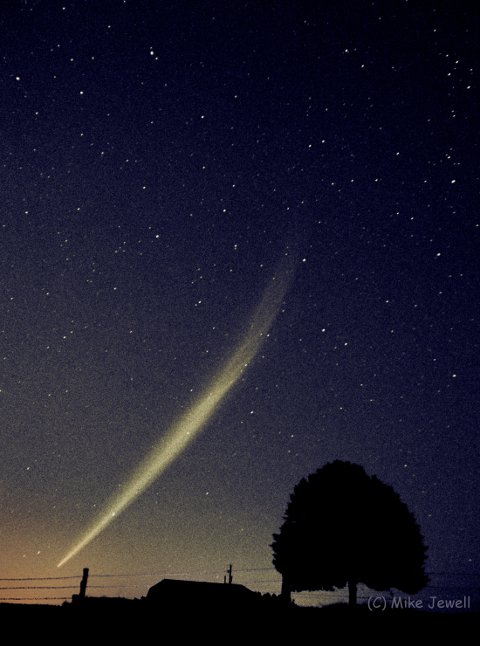
Image credit and ©: Mike Jewell
Comet Ikeya-Seki (C/1965 S1) is a member of the Kreutz family of sun-grazing comets that was visible in broad daylight during October 1965 and displayed a tail 60° long at maximum; its nucleus split into three parts at perihelion. It was discovered independently in September 1965 by the Japanese amateur astronomers Kaoru Ikeya (1943–) and Tsutomu Seki (1930–).
| visual magnitude | -10 (max.) |
| perihelion | 0.008 AU (1.2 million km) |
| eccentricity | 0.9999 |
| inclination | 141.9° |
| period | 880 years |

