
neutrophil
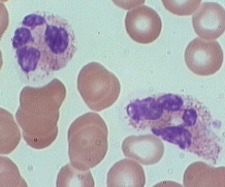
Neutrophiles (stained purple). Credit: University of Virginia.
The neutrophil is the most numerous type of leukocyte, accounting for 70% of all white blood cells. Neutrophils are important in the inflammatory process, as phagocytes and mediators of inflammatory reactions. A mature neutrophil is 12 to 15 microns in diameter and has a nucleus composed of 2 to 5 lobes. The chromatin is dense and clumped with distinct lighter areas of parachromatin.
When the physical integrity of the body is breached and foreign objects (especially bacteria) manage to enter, neutrophils aggregate at the site in enormous numbers by chemotactic factors released from the damaged tissue. Invaders are engulfed and destroyed by lysis. In the process, the neutrophils die, their lysed remnants constituting pus.

