
Pelican Nebula (IC 5070)
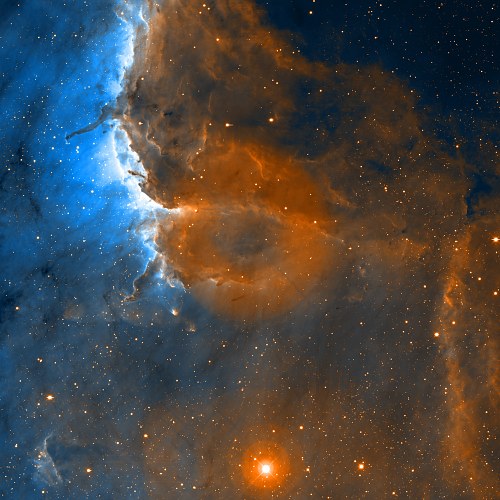
Close-up of the Pelican Nebula ionization front. Credit: University of Colorado, University of Hawaii, and NOAO/AURA/NSF.
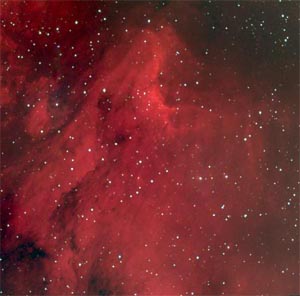
The Pelican Nebula. Image courtesy Richard Crisp.
The Pelican Nebula (IC 5070) is a large area of emission nebula in the constellation Cygnus, close to Deneb, and divided from its brighter, larger neighbor, the North America Nebula, by a molecular cloud filled with dark dust. The Pelican is much studied because it has a highly active mix of star formation and evolving gas clouds. The light from young energetic stars is slowly transforming cold gas to hot and causing an ionization front gradually to advance outward. Particularly dense filaments of cold gas are seen to still remain. Millions of years from now this nebula might no longer be known as the Pelican, as the balance and placement of stars and gas will leave something that appears completely different.
| visual magnitude | 8.0 |
| angular size | 60' × 50' |
| linear diameter | 30 light-years |
| distance | 1,800 light-years (550 pc) |
| position | RA 20h 51m, Dec +44° 00' |

