
paranasal sinus
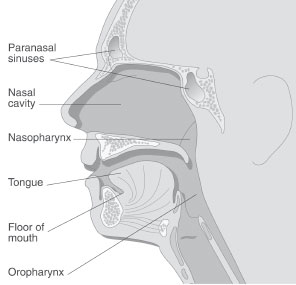
Section of the head and neck showing paranasal sinuses.
The paranasal sinus is a cavity in the front of the skull of which, in humans, there are four groups. The paranasal sinuses, also known as the air sinuses, are so-called because they all connect with, and are extensions of, the nasal cavity. Their lining mucous membrane is continuous, though the connecting passages may be intricate. Each group of sinuses takes its name from the bone of the skull in which it is found.
The main ones are the frontal and maxillary. There are also certain groups deep in the skull – the ethmoids and sphenoids. The frontal sinuses are located in the frontal bone of the forehead just above the eyes. The maxillary sinuses, which are the largest paranasal sinuses, are in the cheekbones on each side of the nose. Each maxillary is hollowed out by a great cavity called the maxillary antrum. The ethmoid sinuses lie just above the nasal cavity, and the sphenoid sinuses are behind them.
Disorders of the sinuses
Infections of the nose spread easily to the sinuses causing sinusitis. In this condition, the inflamed mucous membranes of the sinuses becomes swollen, closing the opening and preventing infected material from draining out. When this happens, painful pressure builds up in the sinuses. Other symptoms of a sinus ailment may include dizziness and a runny nose. Allergies, colds, influenza, and many other diseases can result in sinus trouble.
The treatment of sinus disorders includes rest and a liquid diet. Pain-relieving medications are helpful. In serious cases, surgery may be required to puncture a maxillary sinus and permit proper drainage. Sinus trouble can be dangerous because it may serve as a center of infection that spreads to other parts of the body, such as the eye or brain.
Sinuses occur only in mammals, birds, and crocodiles. The huge sphenoid sinus of the elephant extends to the very back of the skull.

