
vitamin D
Vitamin D is a fat-soluble steroid prohormone that plays an important role in regulating body levels of calcium and phosphorus, and in the mineralization of bone. (A prohormone displays no significant hormone activity itself but is a chemical precursor of a hormone.) The term "vitamin D" is imprecise because it can refer to one or more members of a group of steroid molecules. Also, vitamin D is not a true vitamin because in the important form known as D3 (see below), it can (in the presence of adequate sunlight) be manufactured in the body without the need for dietary supplementation. It is more accurate to describe vitamin D as a conditional vitamin.
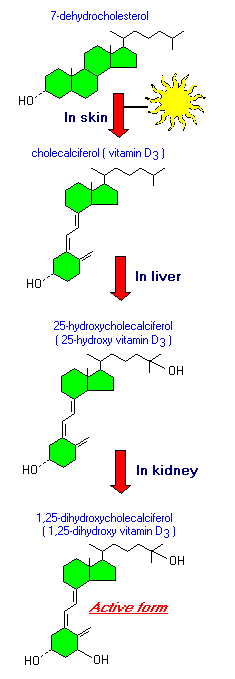
The two major forms of vitamin D are vitamin D2, also called calciferol or ergocalciferol, and vitamin D3, or cholecalciferol. Vitamin D2 occurs in certain plants and in yeast. Vitamin D3 is generated in the skin of animals when sunlight is absorbed by a precursor molecule – a derivative of cholesterol known as 7-dehydrocholesterol.
Dietary sources of vitamin D, include egg yolk, fish oil, and plants that contain vitamin D2. However, natural diets typically don't have enough vitamin D in them for human need, and exposure to sunlight or consumption of foodstuffs purposefully supplemented with vitamin D are necessary to prevent deficiencies.
Vitamin D, either as D2 or D3, isn't significantly biologically activity. Rather, it must be metabolized within the body to the hormonally-active form known as 1,25-dihydroxycholecalciferol. This transformation occurs in two steps, as shown in the diagram:
Pathology
Vitamin D deficiency causes rickets in growing animals and osteomalacia in mature animals, both conditions being characterized by weak, deformed bones. The discovery in 1919–1924 of vitamin D and its production in skin and foods by ultraviolet irradiation led to the elimination of rickets as a major medical problem in children.
Rickets
Rickets is a vitamin D deficiency disease in children causing disordered bone growth at the epiphyses, with growth retardation, defective mineralization of bone, epiphyseal irregularity on X-ray, and pliability and tendency to fracture of bones. It is common among the malnourished (see malnutrition), especially in cool climates where vitamin D in the skin is minimal. Bones become deformed because inadequate amounts of calcium and phosphate are incorporated into them as they grow. A similarly deficiency of calcium and phosphate in adults results in osteomalacia.
Causes
The most common cause of rickets is deficiency of vitamin D, which is vital for the absorption of calcium from the intestine into the blood and for its incorporation into bone. Vitamin D is found in fat-containing animal substances, such as oily fish, butter, egg yolk, and liver. There are also small amounts in human and animal milk. Vitamin D is also made in the body through the action of sunlight on the skin.
Rickets occasionally develops as a complication of a digestive disorder that causes malabsorption (failure to absorb nutrients from the intestine). It may also occur in certain rare forms of kidney and liver disease.
Symptoms and signs
The main feature of advanced rickets is deformity of the bones, especially those of the legs and spine. Typically, there is bowing of the legs and, in infants, flattening of the head as a result of softness of the skull. Infants with rickets often sleep poorly and show delay in crawling and walking.
Other features that occur in rickets include kyphoscoliosis (curvature of the spine), a tendency to fractures, and enlargement of the wrists, ankles, and ends of the ribs. There may also be pelvic pain and muscle weakness.

