whipworm disease
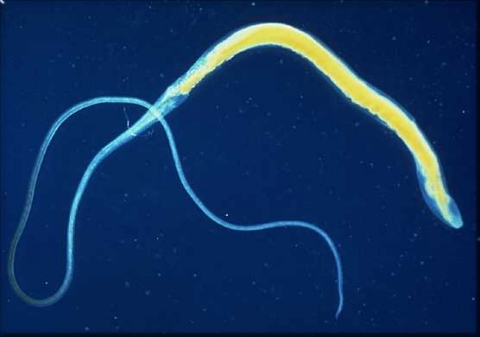
Trichuriasis is caused by the roundworm (nematode) Trichuris trichiura.
Whipworm disease, or trichuriasis, is a parasitic disease of the large intestine. Worldwide, infections usually occur in tropical and subtropical areas and in areas with poor sanitation; they also occur in the southern United States.
An estimated 800 million people, most commonly children, are infected worldwide. Although the incidence of whipworm infection is high, most cases are not severe.
Cause
Whipworm disease is caused by a parasitic roundworm named Trichuris trichiura. The parasite is called whipworm because of its long, very thin, whip-like shape.
According to the Centers for Disease Control and Prevention (CDC), whipworm is the third most common roundworm to infect humans.
Transmission
You can get infected with whipworm by accidentally eating whipworm eggs on from your hands that have been in contact with soil contaminated with whipworms or from eating food containing whipworms.
Symptoms
Whipworm disease often has no symptoms. Heavy infections, however, may cause off-and-on stomach pain, bloody stools, diarrhea, and weight loss. Severe infections in young children can result in serious disease with bloody diarrhea and a condition called rectal prolapse. (Rectal prolapse is when the tissue that lines the rectum falls down into or sticks through the anal opening.)
Diagnosis
Your healthcare provider can usually diagnose it by examining your stool and finding whipworm eggs.
Treatment
The most common treatments for whipworm disease are the drugs known as mebendazole or albendazole.