SOUNDS INTERESTING: The Science of Acoustics - 3. Hear, Hear!

Figure 1. Inside the ear.
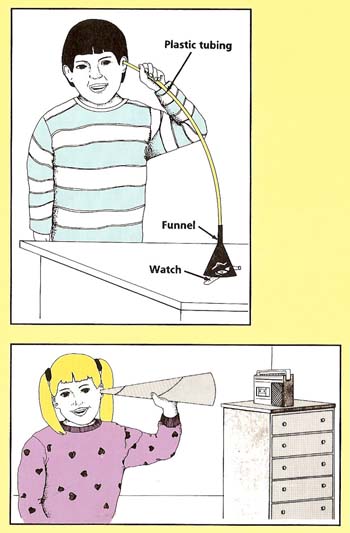
Figure 2. experiments to collect sounds.
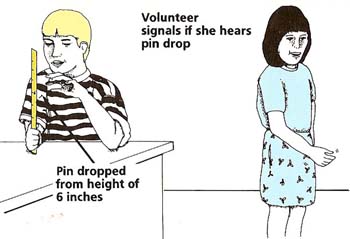
Figure 3. Ear test.
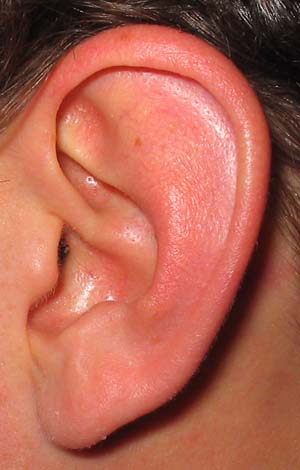
There is more to your ear than meets the eye. All you can see from the outside is a folded lobe of skin, known as the outer ear, and a small, dark passage that leads inward. Along this passage, called the ear canal, sounds travel to the more complicated parts of your ear that lie hidden inside your head.
 |
Journey into the Ear
The outer ear helps to collect sound and funnel it into the ear canal. At the end of the canal is a thin, round sheet of skin called the eardrum. This vibrates back and forth when sounds fall upon it.
Connected to the eardrum are three tiny bones named the hammer, the anvil, and the stirrup because of their shapes. These bones make up the middle ear. The stirrup, measuring less than a fifth of an inch in length, is the smallest bone in the human body. Together, the hammer, anvil and stirrup increase, or amplify, the vibrations of the eardrum and pass them on to the inner ear. Here lies an object known as the cochlea that looks like a snail's shell. The cochlea changes the vibrations it receives into electrical signals which then travel along a special pathway – the auditory nerve – to the brain.
Joined to the cochlea are three loops, set at right angles to each other. These are the semicircular canals which are filled with liquid and play an important part in our ability to balance (see Figure 1).

Collecting SoundsYou will need:
What to do: Roll the sheet of paper or cardboard into a come shape. The come should be as wide as possible at one end and narrow enough at the other to fit comfortably over the opening of your ear canal. Tape the ends of the cone to hold them in place. Turn the radio on so that you can just hear it when standing a few yards away. Hold the cone to your ear and point the wide opening at the radio (see Figure 2). What do you notice? Point the cone in a different direction. What happens?
Push the funnel into one end of the plastic tubing. Place the watch on a table. Hold the funnel over the watch and put the other end of the tubing to your ear. Try to explain your results. Point the funnel at other sources of sound, such as people talking some distance away or a car passing by. |
|
Ear testsYou will need:
What to do: Ask the first volunteer to stand with his or her back to the table. Drop the pin from a height of 6" onto the table. Ask the volunteer to raise a hand if he or she can hear the pin hitting the table. If the volunteer raises a hand, ask him or her to take a step farther away (see Figure 3). Carry out the test again. Continue until the person can no longer hear the sound of the pin. Measure his or her distance from the table. Repeat this with each of the remaining volunteers. What are your findings? Plot a graph of distance from the table against age. Does there seem to be any connection between a person's age and his or her ability to hear the pin drop?
Taking it further:
Your results will be more meaningful if you can include more people in the test. You might also see what happens if you drop a different kind of object, such as an eraser, from a fixed distance. Do the results change if the sound is of a different pitch or quality?
What happens if you plug one of the ears of each volunteer with cotton? (Be sure to provide a fresh piece of cotton for each volunteer.) How does this affect the distance at which each person can hear the test object fall? Does it affect all ages by the same amount? Write about your findings and try to explain them. |
What Can You Hear?
Humans can hear sounds within a range of frequencies from about 20 hertz (that is, twenty vibrations per second) to about 17,000 hertz. However, as we grow older, both the sharpness of our hearing and our ability to hear very high-pitched sounds decrease.
In addition, we may suffer from a variety of conditions that make us partly or completely deaf. Very loud sounds or a blow on the head may damage the eardrum, or a person may b born with a middle or inner ear that does not work properly. Sometimes this can be helped with a device such as a hearing aid. In other cases, the person may learn to communicate by lip reading and by signaling with his or her hands.
|
Sounds and Directions
You will need:
What to do:
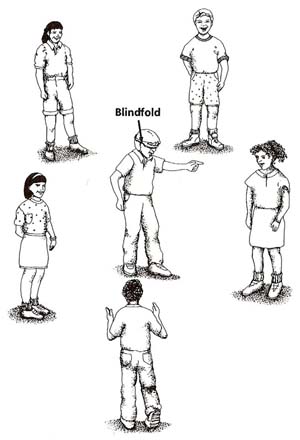
Blindfold a volunteer and have the rest of your helpers stand around him or her in a circle. Take turns making a quiet sound, such as a snap of the fingers. The person in the center has to point in the direction from which he or she thinks the sound is coming. How good is he or she at finding the correct direction? Repeat the test several times with other volunteers wearing the blindfold. Are some people better than others at pinpointing the direction of the sounds? What happens if the person in the center puts a cotton plug in one of his or her ears? Does this make his or her ability to tell the direction of the sounds better or worse? Can you explain your results? |
Hearing Aids and Implants
A hearing aid works simply by picking up sounds from outside and then making them louder or clearer so that the wearer can hear better or more clearly. But a hearing aid is no use to someone who cannot hear at all. A new device, however, known as a cochlear implant, means that even some totally deaf people can be given a sense of hearing. The cochlear implant consists of a tiny, flat radio receiver and a long tail containing one or more very fine wires. During an operation, the receiver is placed beneath the skin, just behind the ear. The long tail is pushed inside the curl of the snail-shaped cochlea. Outside the ear is a microphone that picks up sound and passes it to a miniature computer. This computer changes the sounds to pulses of electricity which are passed to the radio receiver and then on to the cochlea. The most advanced implants available at present sort the incoming sounds into as many as 22 different bands, according to their frequency, and send each of these to a different part of the cochlea.
|
Noise and ConcentrationYou will need:
What to do: Choose three different passages from a book and prepare ten questions on each. The passages should be short enough that they can each be read in about a minute.
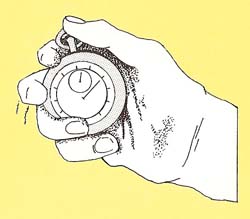
Ask the first volunteer to sit at the desk. Make sure the room is quiet. Put the first passage in front of the person and allow him or her exactly one minute, as measured by the stopwatch, to read it. When the time is up, close the book and ask the ten prepared questions, noting the volunteers replies. Next, turn on the radio between stations so that you can hear a loud hiss of "static." Make a note of the volume setting on the radio. Allow the volunteer to study the second passage for one minute and again record the answers to your ten questions. Finally, switch on the tape recorder playing loud pop music. Give the volunteer the third passage and after one minute ask the third set of questions. Repeat the experiment with several other people, making sure that the conditions are the same for each. Add up the total number of correct answers for each passage in the book and divide by the number of volunteers to obtain the average score. What do you find? Do your results suggest that the ability of people to concentrate is affected by noise? Which noise, if any, seems to have the greatest effect – the hiss of the untuned radio or the taped music?
Taking it further: There are many ways to extend this test. For example, you could investigate whether people's concentration is more affected by loud rock music or loud classical music. Does television have a greater effect than a stereo playing at the same volume? Are people's abilities to perform other tasks – doing a jigsaw puzzle, shooting baskets, and so on – influenced by noise? Design your own experiments to answer some of these questions.
This experiment, or series of experiments, could be developed into a science fair project. Among some questions that such a project might try to answer: Does background noise, such as that of a television set, affect a person's ability to do homework? Can we concentrate better in total silence or with some quiet, soothing sounds going on? Does very loud noise affect our reaction time – that is, the speed with which we can respond to a sudden signal? |
 |