acetylcholine
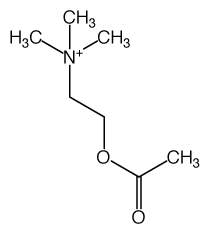
Acetylcholine molecule.
Acetylholine (ACh) is one of the main neurotransmitters in the vertebrate nervous system. It is released at some (cholinergic) nerve endings and may be excitatory or inhibitory. It passes on a nerve impulse to the next nerve or to initiate muscular contractions. The released acetylcholine is rapidly broken down by the enzyme acetylcholinesterase, into choline and acetic acid, to allow the transmission of following (subsequent) impulses.
Among other functions, acetylcholine is responsible for much of the stimulation of muscles, including the muscles of the gastrointestinal system. It is also found in sensory neurons and in the autonomic nervous system, and has a part in scheduling REM (dream) sleep.
Anticholinergenic drugs block the action of acetylcholine at receptor sites; anticholinesterases and acetylcholinesterase inhibitors prolong the activity of acetylcholine by blocking cholinesterase.
In the brains of people suffering from Alzheimer's disease, there is roughly a 90% decrease in acetylcholine levels.
Acetylcholine was the first neurotransmitter to be discovered. It was first isolated in 1921 by the German-born American pharmacologist Otto Loewi, who won the Nobel Prize in Physiology or Medicine (1936) for his work.