
capillary
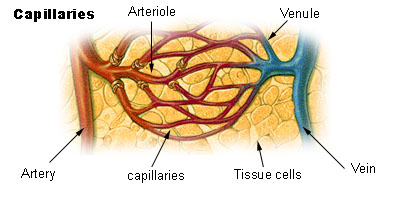
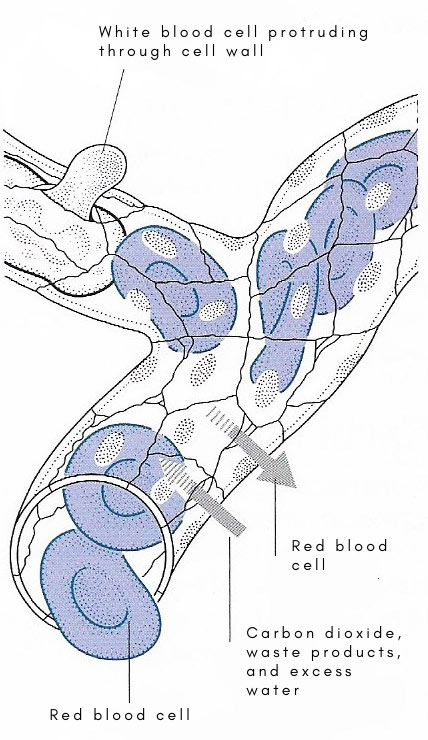
Structure of capillaries. These tiny blood vessels have thin, permeable walls, which allow the transfer of oxygen, glucose, and water from blood to tissues and the transfer of carbon dioxide, waste products, and excess water from tissues into blood.
1. A capillary is the narrowest type of blood vessel in the circulatory system. Capillaries have a diameter of approximately 0.008 millimeter – not much wider than the red blood cells (erythrocytes) that flow through them.
Capillaries form the connection between the vessels that carry blood away from the heart (arteries) and the vessels that return blood to the heart (veins). Their primary function is the exchange of materials between the blood and tissue cells.
The wall of a capillary, called the capillary endothelium, is only one cell layer thick, so that oxygen and nutrients can pass through it into the surrounding tissues. Capillaries also transport waste material (e.g. urea and carbon dioxide) to venules for ultimate excretion.
Capillary distribution varies with the metabolic activity of body tissues. Tissues such as skeletal muscle, liver, and kidney have extensive capillary networks because they are metabolically active and require an abundant supply of oxygen and nutrients. Other tissues, such as connective tissue, have a less abundant supply of capillaries. The epidermis of the skin and the lens and cornea of the eye completely lack a capillary network. About 5 percent of the total blood volume is in the systemic capillaries at any given time. Another 10 percent is in the lungs.
Smooth muscle cells in the arterioles, where they branch to form capillaries, regulate blood flow from the arterioles into the capillaries.
2. A capillary tube is a very thin glass tube (approximately 1.1 or 0.75 millimeters in diameter). See also capillary action.

