
dysentery
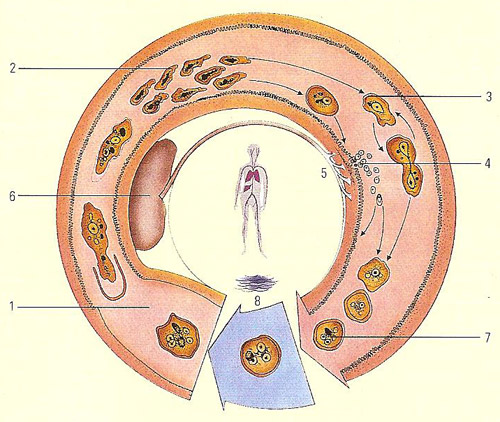
Amebic dysentery is caused by the microbe Entameba histolytica, found in contaminated water and food. Entameba is a natural inhabitant of the gut, however, under certain conditions invasion of the gut wall occurs. Ingested Entameba cysts undergo division and multiplication in the large intestine (1). After division, eight trophozoites (feeding protozoa) are produced (2), non-infective trophozoites remain in the intestine (3) feeding on bacteria and food particles. Infective trophozoites invade the gut wall (4), multiply and dissolve away tissues by producing protein-digesting enzymes. If organisms enter the blood stream (5) they can be carried to the lungs (6), liver and brain where abscesses develop. Those released from gut abscesses reinvade tissues or form cysts (7) and are passed in the feces. The disease is transmitted if flies carry cysts from feces to food or, more commonly, drinking contaminated water (8).
Dysentery is a bacterial or parasitic disease causing abdominal pain, diarrhea, and fever. In children, bacterial dysentery due to Shigella species is a common endemic or epidemic disease, and is associated with poor hygiene. It is a short-lived illness but may cause dehydration in severe cases. The organism may be carried in feces in the absence of symptoms. Antibiotics may be used to shorten the attack and reduce carrier rates.
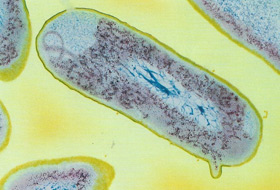 |
| Bacterial dysentery is caused by the Shigella bacterium. |
Amebic dysentery, also called amebiasis, is a chronic disease, usually seen in warm climates, with episodes of diarrhea and constipation, accompanied by mucus and occasionally blood; constitutional symptoms occur and the disease may resemble non-infective colitis. Treatment with ementine, while effective, is accompanied by a high risk of toxicity; metronidazole is a less toxic antiamebic agent.

