
FAST (Fast Auroral Snapshot Explorer)
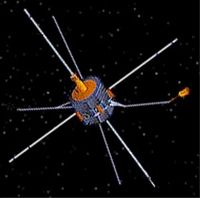
FAST (Fast Auroral Snapshot Explorer) is a NASA satellite designed to observe and measure rapidly-varying electric and magnetic fields and the flow of electrons and ions above aurorae; it was the second SMEX (Small Explorer) mission. FAST's data is complemented by those from other spacecraft, which observe fields and particles and photograph the aurora from higher altitudes. At the same time, auroral observatories and geomagnetic stations on the ground supply measurements on how the energetic processes FAST observes affect Earth. Although made ready for a mid-1994 launch date, FAST was put in storage for a couple of years until a series of problems with the Pegasus launch vehicle could be corrected.
| launch date | Aug 21, 1996 |
| launch vehicle | Pegasus XL |
| launch site | Vandenberg Air Force Base |
| orbit | 353 × 4,163 km × 83.0° |
| size | 1.8 × 1.2 m |
| mass | 187 kg |

