
gall bladder
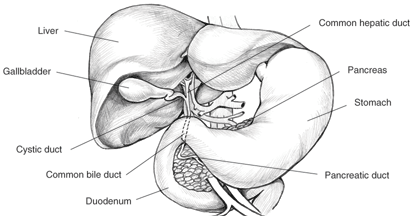
The gall bladder is a pear-shaped organ, 7 to 10 cm long, that lies just below the right lobe of the liver and is attached to the visceral surface of the liver by the cystic duct. The main function of the gall bladder is to store the bile that is secreted by the liver; the bile travels to the gall bladder along the common hepatic duct. In the gall bladder, the bile is concentrated by the reabsorption of water from it. When fatty food is digested, the gall bladder contracts, under the action of the hormone cholecystokinin, thus delivering bile through the bile ducts to the small intestine where it is able to help dissolve fats.
The most common disorder of the gall bladder is gallstones, which are composed of cholesterol crystals or pigment material.

