
intrusive
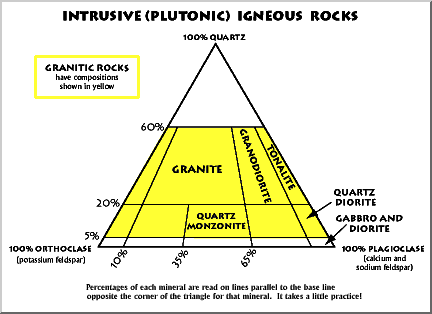
Types and composition of intrusive rocks. Credit: USGS.
Intrusive rocks are igneous rocks that have formed underground. Intrusive, or plutonic, igneous rock forms when magma is trapped deep inside the Earth. Great globs of molten rock rise toward the surface. Some of the magma may feed volcanoes on the Earth's surface, but most remains trapped below, where it cools very slowly over many thousands or millions of years until it solidifies. Slow cooling means the individual mineral grains have a very long time to grow, so they grow to a relatively large size. Intrusive rocks have a coarse-grained texture. A common intrusive rock is granite.
Compare with extrusive.

