
magma
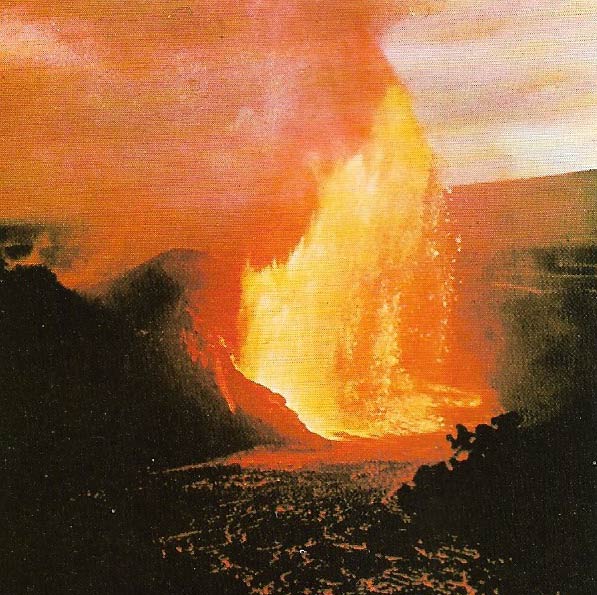
Magma that reaches the surface is known as lava. Hawaiian-type eruptions are characterized by lava flows consisting of basalt and they often accompanied by fiery lava fountains.
Magma is molten rock in the interior of the Earth (or some other planet or moon), composed of a mixture of various complex silicates in which are dissolved various gaseous materials, including water vapor. If it reaches the surface it is known as lava; upon solidifying it forms igneous rock.
Magma typically consists of (1) a liquid portion (often referred to as the melt); (2) a solid portion made of minerals that crystallized directly from the melt; (3) solid rocks incorporated into the magma from along the conduit or reservoir, called xenoliths or inclusions; and (4) dissolved gases.
Magma that cools and solidifies within the crust may form either plutonic (at great depths) or hypabyssal (at intermediate depths) rocks.
Large masses of magma are called batholiths, and thin seams of magma create sills and dikes.
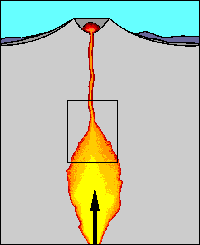 |
| Sketch of a magma reservoir beneath a volcano and a conduit leading up to a lava dome at the surface. Arrow indicates direction of magma movement from a deeper source. Credit: B. Myers / US Geological Survey. |

