
kinase
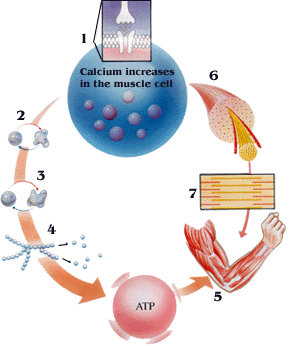
The role of kinase in muscle action. 1. Acetylcholine is released from a motor nerve. This causes an entry of calcium into the muscle cell. 2. Calcium activates phosphorylase kinase 3. Phosphorylase kinase phosphorylates phosphorylase, which is activated 4. Glycogen is broken to glucose. This is used to generate ATP 5. The muscle works and requires energy in the form of ATP. 6. The muscle contains muscle cells 7. Contractile proteins in the muscle are activated by calcium.
Kinase is an enzyme whose function is to activate another enzyme from its precursor. This activation is achieved by transferring a phosphate group (phosphorylation) from ATP (adenosine triphosphate), or other high-energy phosphate, to the precursor molecule. For this reason, kinases are also known as phosphotransferases.
The largest group of kinases consists of the protein kinases. An example is peptidase which is secreted by the small intestine and converts trypsinogen to trypsin.

