
Morrison, Philip (1915–2005)
Philip Morrison was a theoretical astrophysicist and Institute Professor at the Massachusetts Institute of Technology who played a significant role in advocating SETI for several decades. In September 1959, while at Cornell University, he and Guiseppe Cocconi were the first scientists to call upon the professional community to carry out a coordinated search for intelligent extraterrestrial signals.1 They made the pivotal suggestion that the best frequency at which to search for signals from intelligent extraterrestrials is 1420 megahertz (MHz), corresponding to the 21-centimeter line of neutral hydrogen:
It is reasonable to expect that sensitive receivers for this frequency will be made at an early stage of the development of radio astronomy. That would be the expectation of operators of the assumed source, and the present state of terrestrial instruments indeed justifies the expectation.
They proposed that the search begin with 7 reasonably Sun-like stars within a radius of 15 light-years, and closed with this challenge:
The reader may wish to consign these speculations wholly to the domain of science fiction. We submit, rather, that the foregoing line of argument demonstrates that the presence of interstellar signals is entirely consistent with all we now know, and that if signals are present the means of detecting them is now to hand.
Cocconi and Morrison's paper served to spark a debate among scientists that continues to this day. The year of its appearance coincided with the start of preparations for the first search for extraterrestrial signals, Project Ozma, by Frank Drake.
Morrison recalled the genesis of this movement:2
During a chamber music performance in the Cornell Student Center I began to think of the possibilities of gamma-ray astronomy. By the end of 1958, I had published a summary of what might be learned from gamma-ray astronomy... the paper was challenging, and a few months later, in the spring of 1959, Guiseppe Cocconi came into my office. We were thinking about gamma-rays of natural origin when we realized that we knew how to make them, too. We were making lots of them downstairs at the Cornell synchrotron. So Cocconi asked whether they could be used for communicating between the stars. It was plain that they would work, but they weren't very easy to use. My reply was enthusiastic but cautious. Shouldn't we look through the whole electromagnetic spectrum to find the best wavelength for any such communication? That was the germ of the idea.
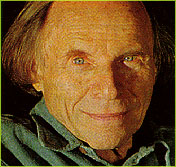 |
Morrison received his BS from the Carnegie Institute of Technology (1936) and PhD in theoretical physics from the University of California, Berkeley (1940), under the supervision of J. Robert Oppenheimer. From 1942–1946 he worked on the Manhattan Project, then joined the physics faculty of Cornell. From 1965 he was on on the faculty at MIT. Aside from his role in instigating the modern SETI movement, Morrison was a leader in organizing and chairing conferences on the subject, including those at Byurakan (1971) (see Byurakan SETI conferences) and Boston University (1973), various NASA symposia on SETI, and the IAU meetings on SETI (1980 and 1984).
References
1. Cocconi, G., and Morrison, P. "Searching for Interstellar Communication," Nature, 184, 844 (1959).
2. Swift, David. Seti Pioneers: Scientists Talk About Their Search for Extraterrestrial Intelligence. Tucson: University of Arizona Press (1990).

