
main sequence
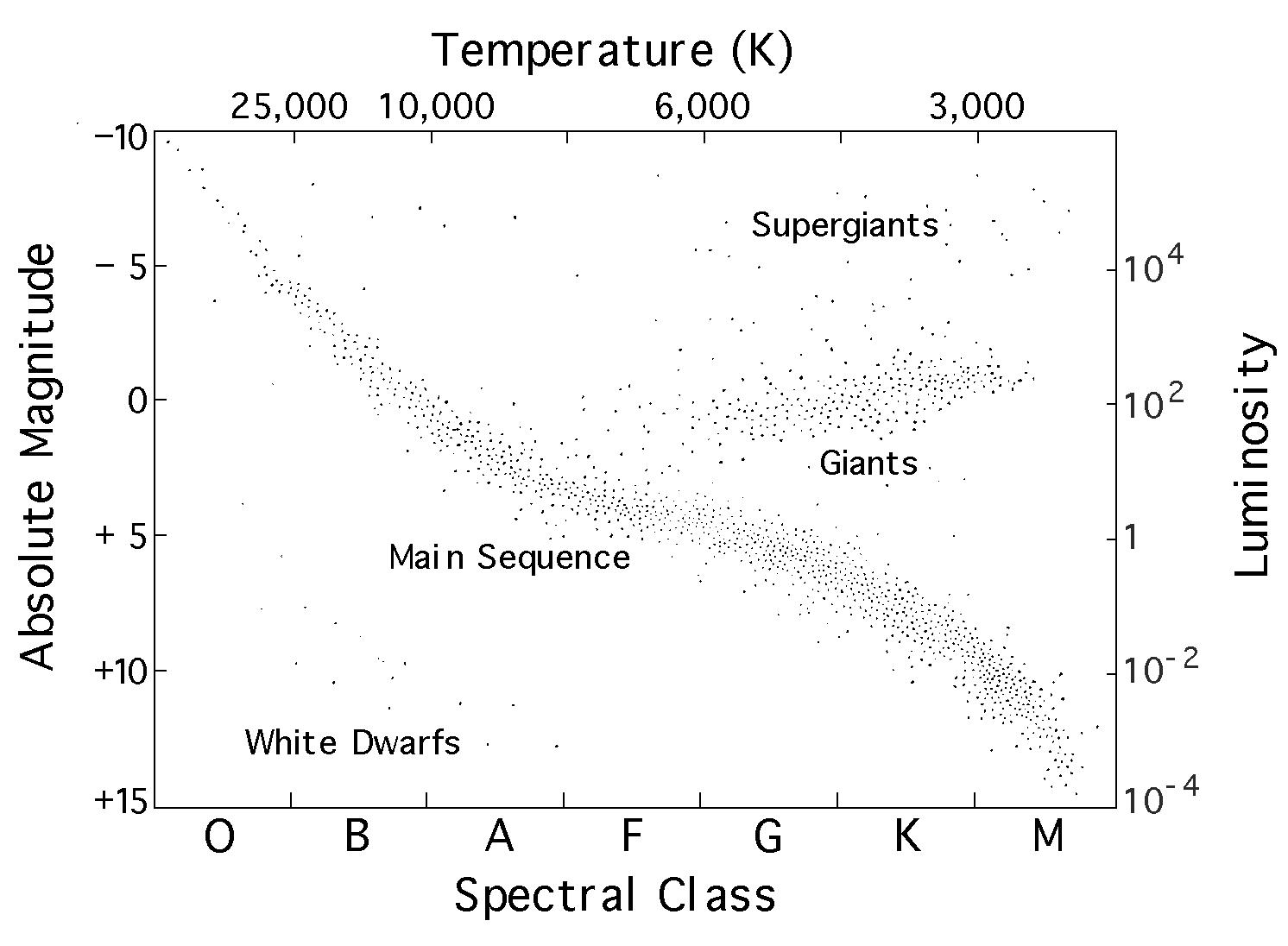
The main sequence is the curving track on the Hertzsprung-Russell diagram, from top left (high temperature, high luminosity) to lower right (low temperature, low luminosity), along which 90% of visible stars lie. A star on the main sequence is one that is generating light and heat by the conversion of hydrogen to helium by nuclear fusion in its core. The Sun, along with the bulk of the stars visible to the naked eye, are main sequence stars.
A star arrives on the main sequence after it starts hydrogen burning in its core and remains there throughout its core-hydrogen-fusion phase. A star's position and length of stay on the main sequence depend critically on mass. The most massive stars – the hot, blue-white O stars and B stars – occur to the upper left and have main-sequence lifetimes of only a few million or tens of millions if years. The least massive, hydrogen-burning stars, the red dwarfs, sit to the lower right and may remain on the main sequence for hundreds of billions of years.
Main-sequence fitting
Main-sequence fitting is the process of determining the distance to a star cluster by overlaying its main sequence on the standard zero-age main sequence (below) and noting the difference between the cluster's apparent magnitude and the zero-age main sequence's absolute magnitude.
Zero-age main sequence
The zero-age main sequence (ZAMS) is the main sequence defined by a population of stars, such as a that of a large cluster, all the members of which have just evolved onto the main sequence.

