metamorphosis

The metamorphosis of a fly begins with an egg (a), from which the larva hatches (b). The pupa stage (c) appears dominant, but within the puparium important changes are taking place under the influence of hormones. The immature fly (d) creeps out of the puparium already equipped with legs and eyes but with rudimentary wings (e) and finally reaches the adult stage, called the imago (f).
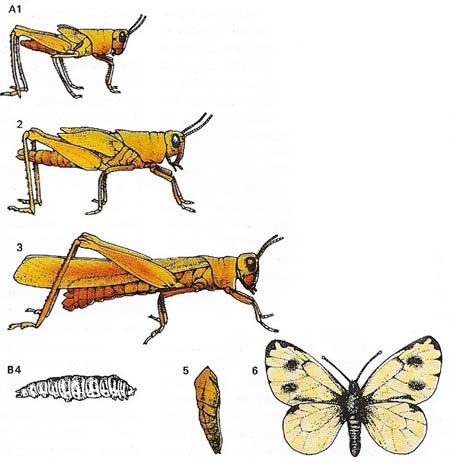
Insects develop by metamorphosis – that is they have different forms during their life cycles. There are two types of metamorphosis. In the grasshopper (A) it is gradual. An egg hatches into a nymph (1), which moults several times (2) before adulthood (3). Butterflies (B) undergo complete metamorphosis with three distinct stages; the larva or caterpillar (4), the pupa or chrysalis (5), which is a quiescent form, and the adult (6).

Metamorphosis of a moth.
Metamorphosis is the transformation of body form and appearance that takes place in the life cycle of many invertebrates (notably insects) and amphibians. There are two main types: complete metamorphosis and incomplete metamorphosis.
Complete metamorphosis, as shown in the diagram, has involves 4 distinct stages of growth: egg, larva, pupa, and adult. As the creatures grow, its shape changes completely. During the pupal stage, the body undergoes a complete reorganization, transforming into the adult. This involves considerable destruction of larval tissues by lysosomes.
Incomplete metamorphosis has only 3 stages: egg, nymph, and adult. In this case, the young hatch from their eggs looking like miniature adults. These young are called nymphs. As they grow, they shed their skin several times before they become adults. At each shedding of the skin, the nymph enters a new 'instar' – a new stage of growth.