
neural tube
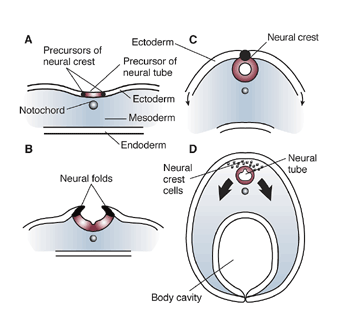
Formation of the neural tube (cross view). Source: National Institutes of Health.
The neural tube is the progenitor of the central nervous system in vertebrates. The neural tube is a longitudinal tube of neural tissue in vertebrate embryos, formed by rolling up of the neural plate until the neural folds join in the mid-dorsal line and the epidermis fuses above.
Early in the development of an embryo, a strip of specialized cells called the notochord (see A in the accompanying diagram) induces the cells of the ectoderm directly above it to become the primitive nervous system (i.e., the neuroepithelium). The neuroepithelium then wrinkles and folds over (B). As the tips of the folds fuse together, a hollow tube (i.e., the neural tube) forms (C) – the precursor of the brain and spinal cord. Meanwhile, the ectoderm and endoderm continue to curve around and fuse beneath the embryo to create the body cavity, completing the transformation of the embryo from a flattened disk to a three-dimensional body. Cells originating from the fused tips of the neuroectoderm (i.e., neural crest cells) migrate to various locations throughout the embryo, where they will initiate the development of diverse body structures (D).

