sinoatrial node
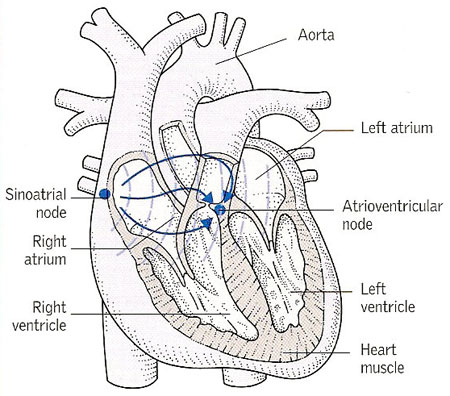
The sinoatrial node (SA) is the natural pacemaker of the heart. It consists of a cluster of specialized muscle cells within the wall of the right atrium (upper chamber) of the heart. Without any external influence, these cells emit electrical impulses at a rate of 100 per minute, which initiate the contractions (beats) of the heart. External control by the vagus nerve reduces the rate to about 70 per minute. Various hormones and nervous system activities can affect the node, causing it to emit impulses at a different rate, thus slowing down or speeding up the heart. See heart rate.
Spread of the impulse
From the sinoatrial nerve, the waves of contraction spread over both atria and then to the atriaventricular node serving the ventricles. The spread of excitation over the two atria is fairly slow; the spread over the ventricles is rapid.