
Von Pirquet, Guido (1880–1966)
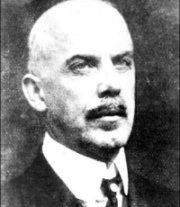
Guido von Pirquest was a alented Austrian engineer who carried out seminal studies of the most efficient way for spacecraft to travel to the planets. Von Pirquet, a member of a distinguished Austrian family (his brother Clemens was a world-renowned physician), studied mechanical engineering at the Universities of Technology in Vienna and Graz. His expertise in ballistics and thermodynamics soon won him recognition in European rocket circles. He was elected first secretary of the rocket society founded by Franz von Hoefft and made his most important contributions to rocketry through a 1928–1929 series of articles called "Travel Routes" in the German Rocket Society's periodical Die Rakete (The Rocket) and a book Die Möglichkeit der Weltraumfahrt (The Possibility of Space Travel) edited by the young Willy Ley in 1928. In these writings he describes the most fuel-efficient trajectories for reaching the planets Venus, Mars, Jupiter, and Saturn). Through calculations of a rocket nozzle for a manned rocket to Mars, he shows that the rocket needed to liftoff directly from Earth would be too large – the nozzle area of the first stage being about 1,500 square meters– to be technically feasible; thus he concludes that a manned expedition to Mars could only be accomplished by building a space station in Earth orbit, where the spaceship for travel to Mars could be assembled. His 1928 calculated trajectory for a space probe to reach Venus is identical to the one used by the first Soviet interplanetary spacecraft to Venus in 1961.
 |
Reference
1. von Pirquet, G. Various articles, Die Rakete, vol. II, 1928.

