
Bergson, Henri (1859–1941)
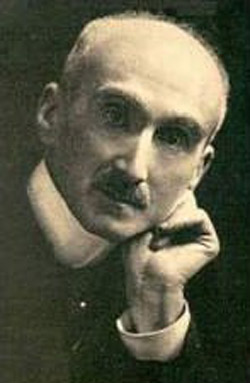
Henri Bergson was a French philosopher and writer who was the first exponent of process philosophy. He reacted against the physcists' definition of time, substituting a notion of experienced duration; rejected the psychophysical parallelism of the day and asserted the independence of mind; and popularized the idea of an élan vital, or creative force, at the heart of evolution, rather than a deterministic natural selection. Together with Hans Driesch in Germany, he advocated a return to a form of vitalism ('neovitalism') which, as Leonard Troland put it:1
... asserts that the phenomena of life are not determined by law-abiding forces but by a form of activity the effects of which are unpredictable, ... chaotic and beyond the range of science.
Bergson was awarded the 1927 Nobel Prize in Literature.
Reference
1. Troland, L. "The Chemical Origin and Regulation of Life," The Monist, 24, 92 (1914).

