endosymbiotic theory
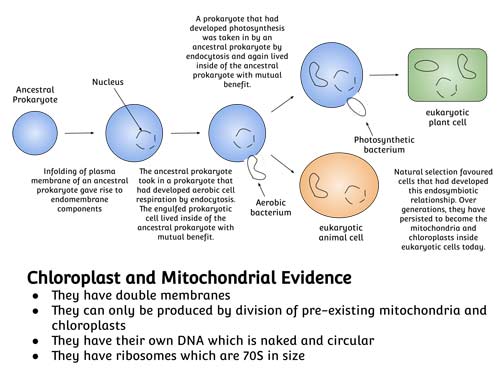
An overview of the endosymbiosis theory of eukaryote origin.
Endosymbiotic theory is a theory first proposed by Lynn Margulis, and now widely accepted, that eukaryotic cells evolved from a symbiosis between different species of prokaryotes. Larger species, it is suggested, engulfed smaller ones that continued to live and function within the larger host cell, eventually losing all possibility of independence. Two organelles believed to have entered larger cells in this way are mitochondria and chloroplasts, which have their own small ribosomes, which resemble those of bacteria, and also their own DNA distinct from that of the host cell.
See also symbiosis.