
hypothalamus
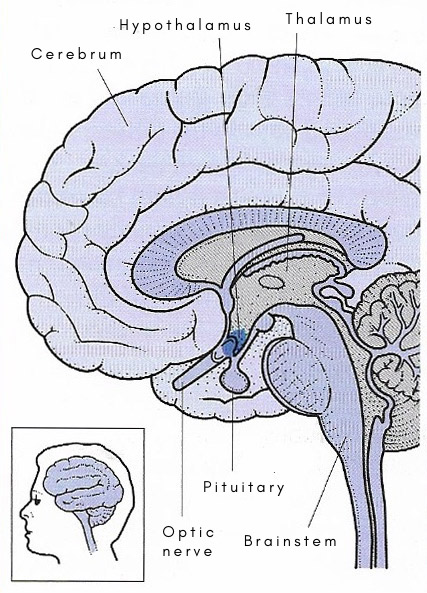
The hypothalamus, shown in dark blue, lies under the thalamus and above the pituitary gland.
The hypothalamus is a region of the vertebrate brain that is derived
from the forebrain; it is located on the
ventral surface, in the floor of the third ventricle,
below the thalamus and the cerebrum,
and above the pituitary gland. The
hypothalamus contains several important centers which control body temperature,
thirst, hunger, water balance, and sexual function. It is also closely connected
with emotional activity and sleep, and functions
as a center for the integration of hormonal and autonomic nervous activity
through its control of secretions by the pituitary gland.
The hypothalamus exerts overall control over the sympathetic
nervous system (part of the autonomic
nervous system). In response to sudden excitement or alarm, signals
are sent from the higher regions of the brain to the hypothalamus, which
initiates sympathetic nervous system activity. This increases the heart
rate, breathing rate, and blood flow to the muscles, and causes the
pupils of the eye to widen (all together known as the "fight or flight"
response).
Other groups of nerve cells in the hypothalamus are concerned with the control
of body temperature. Some are sensitive to heat and cold so that, when blood
flowing to the brain is hotter or cooler than normal, the hypothalamus switches
on temperature-regulating mechanisms (among them sweating or shivering).
The hypothalamus receives information from internal sense organs regarding
the body's water content and the level of glucose in the blood; if these
are too low, the hypothalamus stimulates thirst and appetite for food. The
hypothalamus is also involved in regulating sleep, in motivating sexual
behavior, and in determining mood and the experience of emotions.
Another role of the hypothalamus is to coordinate the function of the nervous
and endocrine (hormonal) systems of the entire body. The hypothalamus connects
with the pituitary gland through a short stalk of nerve fibers and controls
hormonal secretions from this gland. It does this in two ways – through
direct nerve connections and through specialized nerve cells, which secrete
hormones called releasing factors into the blood to travel to the pituitary
gland. In this way, the hypothalamus can convert nerve signals into hormonal
signals. Thus, the hypothalamus indirectly controls many of the glands of
the endocrine system, including
the pituitary gland, thyroid gland,
cortex of the adrenal glands, ovaries,
and testes.
 |
| Location of the hypothalamus. |
Disorders of the hypothalamus
Disorders of the hypothalamus are usually caused by a brain hemorrhage within the hypothalamic region or by an expanding pituitary tumor. Loss of hypothalamic function can have diverse effects, ranging from hormonal disorders to disturbances in temperature regulation, and increased or decreased appetite for food, sex, and sleep.

