
jaw
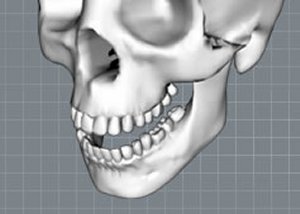
The jaw is either of two bony structures that hold the teeth and frame the mouth in humans and most vertebrates. The upper jawbone, or maxilla, is fused to the skull. The lower jawbone, or mandible, is movable, having two ligament hinges, one at each side of the temple near the entrance to the ear. Powerful muscles, arising from the temple on either side, attach to the mandible for movements needed in chewing and biting; other muscles allow side-to-side and downward movement.
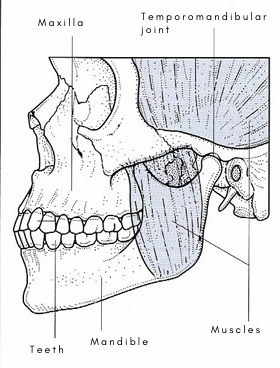 |
| The U-shaped jawbone (mandible) joins the skull in front of the ears, at the temporomandibular joint. The jaw can move in several directions to enable biting and chewing. |
Dislocated jaw
Displacement of the lower jaw from one or both of the temporomandibular joints (located at the base of the skull) may be caused by a blow or by yawning. The jaw is the most commonly dislocated jaw because it is very unstable. Once dislocation has happened, it tends to recur.

