
molting
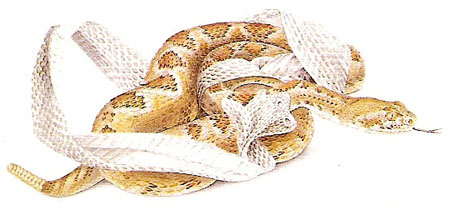
A snake molting. Land-living vertebrates produce keratin – a hard, water-resistant protein – in the outer skin layer cells. As keratinization causes many cell components to degenerate, and eventually die, the layer of keratinized cells is shed from time to time. Snakes and other reptiles literally crawl out of their skins. Birds and mammals, in contrast, slough of small pieces of keratinized skin almost continually.
Molting is a process involving the shedding of the outermost layers of an organism and their replacement. Mammals molt by shedding outer skin layers and hair, often at seasonal intervals – humans do not molt but lose dead, dry skin continuously as it is replaced from below (most household dust is powdered skin). Birds molt their feathers, and amphibians and reptiles their skin. In all cases the process is controlled by hormones, such as ecdysone.
Molting often serves, in growing animals, to replace worn-out tissues of skin that have become too small.
The molting of insects and other arthropods is a more elaborate affair which is fundamental to growth. The process, also called ecdysis, involves the resorption into the body of materials from the hard outer cuticle of the exoskeleton, so making the cuticle more fragile. The arthropod then swells its body and bursts free from the old cuticle, and slowly reforms a new one around its swollen body, thus increasing in size.
Ecdysone
Ecdysone is a hormone that stimulates molting in some animals. It is steroid hormone produced by some crustaceans and insects. By acting at particular sites on genes, it stimulates the production of the proteins that are involved in molting (ecdysis) and metamorphosis.

