
Tyndall, John (1820–1893)
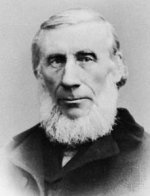
John Tyndall was an Irish physicist who correctly suggested that the blue color of the sky is due to scattering of light by particles of dust and other colloidal particles. He also studied the magnetic properties of crystals, and the scattering of light by colloidal particles in solution (now known as the Tyndall effect).
Tyndall also championed the now-accepted notion that there is no fundamental difference between animate and inanimate matter, and that the origin of life was chemical:1
[T]he matter of the animal body is that of inorganic nature. There is no substance in the animal tissues which is not primarily derived from the rocks, the water and the air... a perfect reversal of this process of reduction would carry us from the inorganic to the organic, and such a reversal is at least conceivable.
Carrying on from where Spallanzini, de la Tour, and Pasteur had left off, Tyndall also finally disposed (1881) of the old idea of spontaneous generation by answering the last objection raised by supporters of that view. It had been observed that microbes sometimes began growing in infusions, such as those of hay, even after the latter had been boiled. Tyndall showed that the reason for this was that the hay contained spores which can survive even after long exposure to high temperature.
 |
Reference
1. Tyndall, J. Fragments of Science, p. 459, London: Longmans, Green (1876).

