
telomere
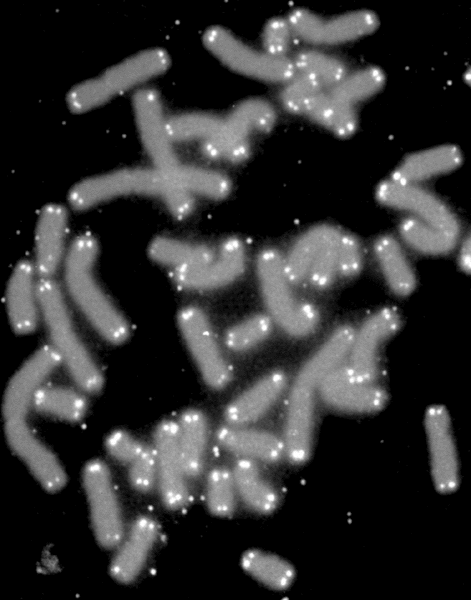
Telomere caps. Image source: U.S. Department of Energy Human Genome Program.
A telomere is a repeating sequence of DNA that caps the end of a chromosome, helping to ensure that the DNA molecule is completely replicated. Greater telomere length is associated with immortalized cell lines such as embryonic stem cells and cancer cells.
As cells divide and differentiate throughout the lifespan of an organism or cell line, the telomeres become progressively shortened and lose the ability to maintain their length. Telomerase is an enzyme that lengthens telomeres by adding on repeating sequences of DNA. Unlike many other enzymes, which are made of only proteins, telomerase also contains RNA – a nucleic acid like DNA but that has only a single strand. Telomerase binds to the ends of the telomere via an RNA template that is used for the attachment of a new strand of DNA. Telomerase adds several repeated DNA sequences then releases and a second enzyme, DNA polymerase, attaches the opposite or complementary strand of DNA completing the double stranded extension of the chromosome ends.
High levels of telomerase activity are detected in embryonic stem cells and cancer cells, whereas little or no telomerase activity is present in most mature, differentiated cell types. The functions of telomeres and telomerase appear to be important in cell division, normal development, and aging.

