
Wollaston, William Hyde (1766–1828)
William Wollaston was an English chemist and physicist who, in 1801, discovered dark lines in the solar spectrum (the first observation of spectral lines), which were later investigated by Fraunhofer. After practicing as a physician, he confined himself to research work when he became partially blind in 1800. Having discovered a new element in 1802, he named it palladium after the newly-found asteroid Pallas and announced it by the curious expedient of offering it for sale anonymously. Wollaston also discovered rhodium, in 1804, the vibratory nature of muscular action, and a way of making platinum malleable. Among his many optical inventions were an apparatus for measuring the refractive power of solids, a modified sextant, a reflecting goniometer (for measuring the geometrical form of crystals), and the camera lucida, a double-image prism that subsequently proved indispensable in microscopy.
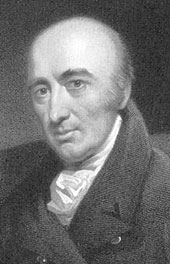 |
Wollaston was born in East Dereham, Norfolk, and obtained a doctorate in medicine from Cambridge in 1793. While practicing medicine for many years, he also became interested in chemistry, physics, crystallography and metallurgy, to which he devoted himself fully from 1800 onward. Wollaston was widely considered as one of the leading scientists of his time. He was elected to the Royal Society in 1793, and served as its Secretary from 1804 to 1816.

