
Zöllner, Johann Karl Friedrich (1834–1882)
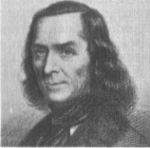
Johann Zöllner was a German astronomer at the University of Leipzig who used photometry to measure the reflectivity of the planets. In a 1874 paper he concluded from Mercury's low albedo that the innermost planet probably had no significant atmosphere. This dealt a severe blow to the prospects for Mercurian habitation. In 1872, Zöllner outspokenly criticized the lithopanspermia hypothesis of William Thomson (Lord Kelvin) on two grounds: (1) that it offered no explanation as to how life arose in the first place (merely shifting that problem from Earth to some other world), and (2) that it failed to explain how organisms could survive the high-temperature passage of a meteorite through Earth's atmosphere.
 |
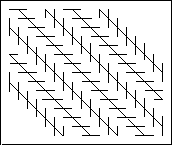
Zöllner illusion
The Zöllner illusion is a line distortion illusion first published by Zöllner in 1860. The diagonal lines, although parallel, appear not to be. The illusion was one of a series specifically designed to cause errors in optical equipment of that time. They did cause errors, and also great concern among scientists, over the validity of all human observations.
 |

