
adrenocorticotropic hormone
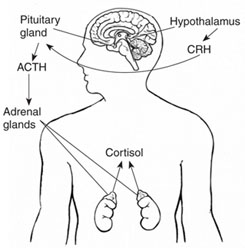
The hypothalamus sends CRH to the pituitary, which responds by secreting ACTH. ACTH then causes the adrenal glands to release cortisol into the bloodstream.

Molecule of ACTH.
Adrenocorticotropic hormone (ACTH) is a polypeptide hormone, consisting of 39 amino acids, which is synthesized from POMC (pre-opiomelanocortin) and secreted from corticotropes in the anterior lobe of the pituitary gland in response to the hormone corticotropin-releasing hormone (CRH) released by the hypothalamus. ACTH, also called corticotropin, is secreted in short bursts every few hours and is increased by stress. In turn, ACTH controls secretion of corticosteroids, including cortisol (hydrocortisone), aldosterone, and androgens, by the adrenal glands. Most important of these is its stimulation of cortisol production.
ACTH production is partly controlled by the hypothalamus and partly by the level of cortisol in the blood. When ACTH levels are high, the production of cortisol is increased; this, in turn, suppresses the release of ACTH from the pituitary. If ACTH levels are low, cortisol production falls and the hypothalamus releases factors that stimulate the pituitary to increase ACTH production.
Medical uses of ACTH
ACTH has been used in an effort to induce remission in multiple sclerosis, though its efficacy in this respect is uncertain. ACTH is also used to diagnose disorders of the adrenal glands and, rarely, to treat inflammatory disorders, such as arthritis, ulcerative colitis, and some types of hepatitis.
Disorders
A tumor of the pituitary gland can cause excessive ACTH production which, in turn, leads to overproduction of cortisol by the adrenal cortex, resulting in Cushing's syndrome. Insufficient ACTH production due, for example, to underactivity of pituitary gland (hypopituitarism), is rare. When it does occur, it causes adrenal failure.

