
high blood cholesterol
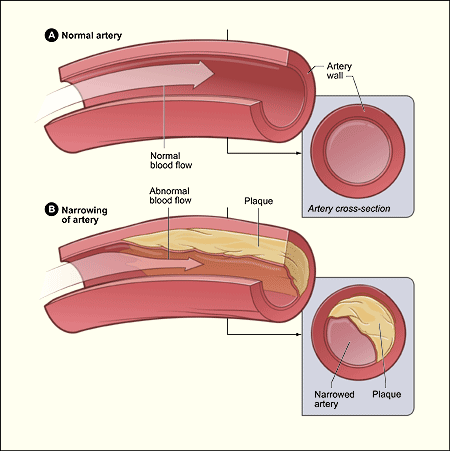
An artery with normal blood flow (figure A) and an artery containing plaque buildup (figure B). Credit: National Institutes of Health.
Too much cholesterol in the blood, or high blood cholesterol, can be serious. People with high blood cholesterol have a greater chance of getting heart disease. High blood cholesterol on its own does not cause symptoms, so many people are unaware that their cholesterol level is too high.
Types of cholesterol
Blood is watery, and cholesterol is fatty. Just like oil and water, the two do not mix. To travel in the bloodstream, cholesterol is carried in small packages called lipoproteins. The small packages are made of fat (lipid) on the inside and proteins on the outside. Two kinds of lipoproteins carry cholesterol throughout your body. It is important to have healthy levels of both:
- High LDL cholesterol leads to a buildup of cholesterol in arteries. The higher the LDL level in your blood, the greater chance you have of getting heart disease.
- HDL carries cholesterol from other parts of your body back to your liver. The liver removes the cholesterol from your body. The higher your HDL cholesterol level, the lower your chance of getting heart disease.
What is high blood cholesterol?
Cholesterol can build up on the walls of your arteries (blood vessels that carry blood from the heart to other parts of the body). This buildup of cholesterol is called plaque. Over time, plaque can cause narrowing of the arteries. This is called atherosclerosis, or hardening of the arteries.
Special arteries, called coronary arteries, bring blood to the heart. Narrowing of your coronary arteries due to plaque can stop or slow down the flow of blood to your heart. When the arteries narrow, the amount of oxygen-rich blood is decreased. This is called coronary artery disease (CAD). Large plaque areas can lead to chest pain called angina. Angina happens when the heart does not receive enough oxygen-rich blood. Angina is a common symptom of CAD.
Some plaques have a thin covering and burst (rupture), releasing fat and cholesterol into the bloodstream. The release of fat and cholesterol may cause your blood to clot. A clot can block the flow of blood. This blockage can cause angina or a heart attack.
Lowering your cholesterol level decreases your chance for having a plaque burst and cause a heart attack. Lowering cholesterol may also slow down, reduce, or even stop plaque from building up.
Plaque and resulting health problems can also occur in arteries elsewhere in the body.
Causes
A variety of things can affect the cholesterol levels in your blood. Some of these things you can control and others you cannot.
You can control:
- Saturated fat raises your low-density lipoprotein (LDL) cholesterol level more than anything else in your diet.
- Trans fatty acids (trans fats) are made when vegetable oil is hydrogenated to harden it. Trans fatty acids also raise cholesterol levels.
- Cholesterol is found in foods that come from animal sources, for example, egg yolks, meat, and cheese.
You cannot control:
Signs and symptoms
There are usually no signs or symptoms of high blood cholesterol. Many people don't know that their cholesterol level is too high.
Everyone age 20 and older should have their cholesterol levels checked at least once every 5 years. You and your doctor can discuss how often you should be tested.
Diagnosis
High blood cholesterol is diagnosed by checking levels of cholesterol in your blood. It is best to have a blood test called a lipoprotein profile to measure your cholesterol levels. Most people will need to not eat or drink anything (fast) for 9 to 12 hours before taking the test.
The lipoprotein profile will give information about your:
If it is not possible to get a lipoprotein profile done, knowing your total cholesterol and HDL cholesterol can give you a general idea about your cholesterol levels. Testing for total and HDL cholesterol does not require fasting. If your total cholesterol is 200 mg/dL or more, or if your HDL is less than 40 mg/dL, you will need to have a lipoprotein profile done.
Cholesterol levels are measured in milligrams (mg) of cholesterol per deciliter (dL) of blood. See how your cholesterol numbers compare to the tables below.
| Total cholesterol level | Total cholesterol category |
| Less than 200 mg/dL | Desirable |
| 200–239 mg/dL | Borderline high |
| 240 mg/dL and above | High |
| LDL cholesterol level | LDL cholesterol category |
| Less than 100 mg/dL | Optimal |
| 100–129 mg/dL | Near optimal/above optimal |
| 130–159 mg/dL | Borderline high |
| 160–189 mg/dL | High |
| 190 mg/dL and above | Very high |
| HDL cholesterol level | HDL cholesterol category |
| Less than 40 mg/dL | A major risk factor for heart disease |
| 40–59 mg/dL | The higher, the better |
| 60 mg/dL and above | Considered protective against heart disease |
Triglycerides can also raise your risk for heart disease. If you have levels that are borderline high (150–199 mg/dL) or high (200 mg/dL or more), you may need treatment. Things that can increase triglyceride levels include:
Treatment
The main goal of cholesterol-lowering treatment is to lower your low-density lipoprotein (LDL) level enough to reduce your risk of having a heart attack or diseases caused by hardening of the arteries. In general, the higher your LDL level and the more risk factors you have, the greater your chances of developing heart disease or having a heart attack. (A risk factor is a condition that increases your chance of getting a disease.) Some people are at high risk for heart attack because they already have heart disease. Other people are at high risk for developing heart disease because they have diabetes or a combination of risk factors for heart disease. Follow the steps below to find out your risk for getting heart disease.
Check the list to see how many of the risk factors you have. These are the risk factors that affect your LDL goal:
Use your medical history, number of risk factors, and risk score to find your risk of developing heart disease or having a heart attack according to the table below.
| If you have | You are in category | And your LDL goal is |
| Heart disease, diabetes, or a risk score higher than 20% | I. Highest risk | Less than 100 mg/dL |
| Two or more risk factors and a risk score 10–20% | II. Next highest risk | Less than 130 mg/dL |
| Two or more risk factors and a risk score lower than 10% | III. Moderate risk | Less than 130 mg/dL |
| One or no risk factors | IV. Low to moderate risk | Less than 160 mg/dL |
After following the above steps, you should have an idea about your risk for getting heart disease or having a heart attack. The higher your risk is, the lower your LDL goal will be. There are two main ways to lower your cholesterol:
The higher your risk for heart disease, the lower your LDL goal will be. Your doctor will set your LDL goal. Using the following guide, you and your doctor can develop a possible plan for treating your high blood cholesterol.
Category I, highest risk, your LDL goal is less than 100 mg/dL.
| Your LDL level | Treatment |
| If your LDL is 100 or above | You will need to begin the TLC Diet together with drug treatment |
| Even if your LDL is below 100 | You should follow the TLC Diet on your own to keep your LDL as low as possible |
Category II, next highest risk, your LDL goal is less than 130 mg/dL.
| Your LDL level | Treatment |
| If your LDL is 130 mg/dL or above | You will need to begin the TLC Diet. |
| If your LDL is 130 mg/dL or more after 3 months on the TLC Diet | You may need drug treatment along with the TLC Diet |
| If your LDL is less than 130 mg/dL | You will need to follow the Heart Healthy Diet. |
Category III, moderate risk, your LDL goal is less than 130 mg/dL.
| Your LDL level | Treatment |
| If your LDL is 130 mg/dL or above | You will need to begin treatment with the TLC Diet |
| If your LDL is 160 mg/dL or more after you have tried the TLC Diet for 3 months | You may need drug treatment along with the TLC Diet |
| If your LDL is less than 130 mg/dL | You will need to follow the Heart Healthy Diet. |
Category IV, low to moderate risk, your LDL goal is less than 160 mg/dL.
| Your LDL level | Treatment |
| If your LDL is 160 mg/dL or above | You will need to begin the TLC Diet |
| If your LDL is still 160 mg/dL or more after 3 months on the TLC Diet | You may need drug treatment along with the TLC Diet |
| If your LDL is less than 160 mg/dL | You will need to follow the Heart Healthy Diet. |
Lowering cholesterol with TLC
TLC is a set of lifestyle changes you can make to help lower your LDL cholesterol. The main parts of TLC are:
- Limiting the amount of saturated fat and cholesterol you eat.
- Eating only enough calories to achieve or maintain a healthy weight.
- Increasing the soluble fiber in your diet. For example, oatmeal, kidney beans, and apples are good sources of soluble fiber. Adding cholesterol-lowering food, such as margarines that contain plant sterol or stanol esters that lower cholesterol for some people.
- Losing weight if you are overweight can help lower LDL. Weight management is especially important for those with a group of risk factors that includes high triglyceride and/or low HDL levels and being overweight with a large waist measurement (more than 40 inches for men and more than 35 inches for women).
- Regular physical activity is recommended for everyone. It can help raise HDL levels and lower LDL levels, and is especially important for those with high triglyceride and/or low HDL levels who are overweight with a large waist measurement.
Cholesterol-lowering medicines
Along with suggesting that you change the way you eat and exercise regularly, your doctor may prescribe medicines to help lower your cholesterol. Even if you begin drug treatment, you will need to continue TLC. Drug treatment controls but does not "cure" high blood cholesterol. Therefore, you must continue taking your medicine to keep your cholesterol level in the recommended range.
The five major types of cholesterol-lowering medicines are:
- Very effective in lowering LDL (bad) cholesterol levels
- Safe for most people
- Rare side effects to watch for are liver and muscle problems
- Help lower LDL cholesterol levels
- Sometimes prescribed with statins
- Not usually prescribed as the only medicine to lower cholesterol
- Lowers LDL cholesterol and triglycerides, and raises HDL (good) cholesterol
- Should only be used under a doctor's supervision
- Lower triglycerides
- May increase HDL (good) cholesterol levels
- When used with a statin, may increase the chance of muscle problems
- Lowers LDL cholesterol
- May be used with statins or alone
- Acts within the intestine to block cholesterol absorption
When you are under treatment, you will be checked regularly to:
You may take medicines for other health problems. It is important that you take ALL medicines as your doctor prescribes. The combination of medicines may lower your risk for heart disease or heart attack.
When trying to lower your cholesterol or keep it low, it is important to remember to follow your treatments for other conditions you may have, such as high blood pressure. Get help with quitting smoking and losing weight if they are risk factors for you.

