Poinsot, Louis (1777–1859)
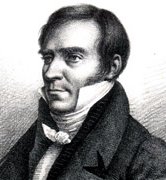
Louis Poinsot was a French mathematician who invented geometrical mechanics, investigating how a system of forces acting on a rigid body can be resolved into a single force and a couple. Together with Gaspard Monge, he help geometry regain its leading role in mathematical research in France in the eighteenth century. He wrote an important work on polyhedra in 1809, discovering four new regular polyhedra, which are now known as the Kepler-Poinsot solids. Two of these had been found by Johannes Kepler in 1619 but Poinsot was unaware of this; the two additional ones that Poinsot discovered were the great dodecahedron and the great icosahedron. In 1810 Augustin Cauchy proved that, with this definition of regular, the enumeration of regular polyhedra is complete (although a mistake was discovered in Poinsot's, and hence Cauchy's, definition in 1990 when an internal inconsistency became apparent.) Poinsot also worked in number theory, studying Diophantine equations with a view to expressing numbers as the difference of two squares and primitive roots.
 |